
Kirsty Littlefair
Google review★★★★★
We recently had Matt from Attention to Detail complete work on our hallway and staircase, and we honestly couldn’t be happier with the results.…Read reviews on Google ↗
MATTHEW ROBINSON PAINTING & DECORATING
Painting and decorating enquiries in Wynyard. Coordinated room schemes, larger spaces and suitable cabinet finishes. Call Matthew Robinson on 07763 095929 for a free quotation.
Tell Matthew your postcode and project details so coverage, suitability and availability can be confirmed.

Large rooms and connected spaces can make decorating choices feel more complicated rather than simpler. A colour is seen from several directions, tall walls reveal the changing light and fitted furniture becomes part of the overall composition. Matthew Robinson Painting & Decorating welcomes Wynyard enquiries for projects where the preparation, palette and practical programme need to be considered together. The objective is a finish suited to your own rooms, from a carefully planned bedroom to several linked spaces, with clear scope before the work starts.
Wynyard is an area addressed in Stockton-on-Tees Council’s masterplanning, but an area label does not tell a decorator what a particular house needs. Give the postcode and describe the property, access and surfaces. A recent interior can still contain worn woodwork or earlier repairs, while an established house can have a newly plastered extension. Avoid assuming that the specification follows the address rather than the evidence. Matthew can discuss the desired appearance once the actual materials, condition and everyday use are understood, and current service suitability and availability are confirmed directly.
Start with the views that connect the rooms. A hall may reveal the living room, dining space and staircase in a single glance. Decide which elements should repeat and which should change deliberately. Repeating a trim colour can provide continuity without making every wall identical. A deep feature colour may work well in one room but dominate another with different light. Assess the scheme from the positions where you actually sit, enter and move through the home.
List the fixed elements you are keeping, including flooring, kitchen finishes, furniture and window treatments. Place real samples beside them and review the combinations in daylight and evening light. A picture of another house can communicate an idea but cannot establish how the same shade will appear in yours. Keep a written colour schedule with product references, finish and the surfaces assigned to each. This becomes particularly helpful where several similar neutrals are being used. Clear decisions before ordering reduce the chance of a visual scheme being altered inadvertently because a broadly described colour was interpreted differently.
Tall windows, wall lights and recessed fittings can make surface irregularities visible from particular angles. Look at the rooms under their normal lighting before deciding what preparation is required. Photographs should include wide views and close details of patches, cracks or old fixings. Tell Matthew about repaired service chases, removed shelving and any defects that return. The desired finish needs to be discussed against the actual surface rather than a standard expectation that every wall will appear perfectly flat under every lighting condition.
Surface preparation and wall correction may include appropriate filling, smoothing, cleaning and priming after assessment. Active moisture, movement or substantial plaster failure requires a different conversation and may need another specialist first. A darker or higher-sheen finish can make some defects more obvious, so the product choice and preparation should be considered together. If lighting is being changed, explain the final arrangement rather than assessing the walls only under temporary work lights. It is easier to agree a realistic approach before application than to discover afterwards that the intended lighting reveals a surface characteristic no one considered.
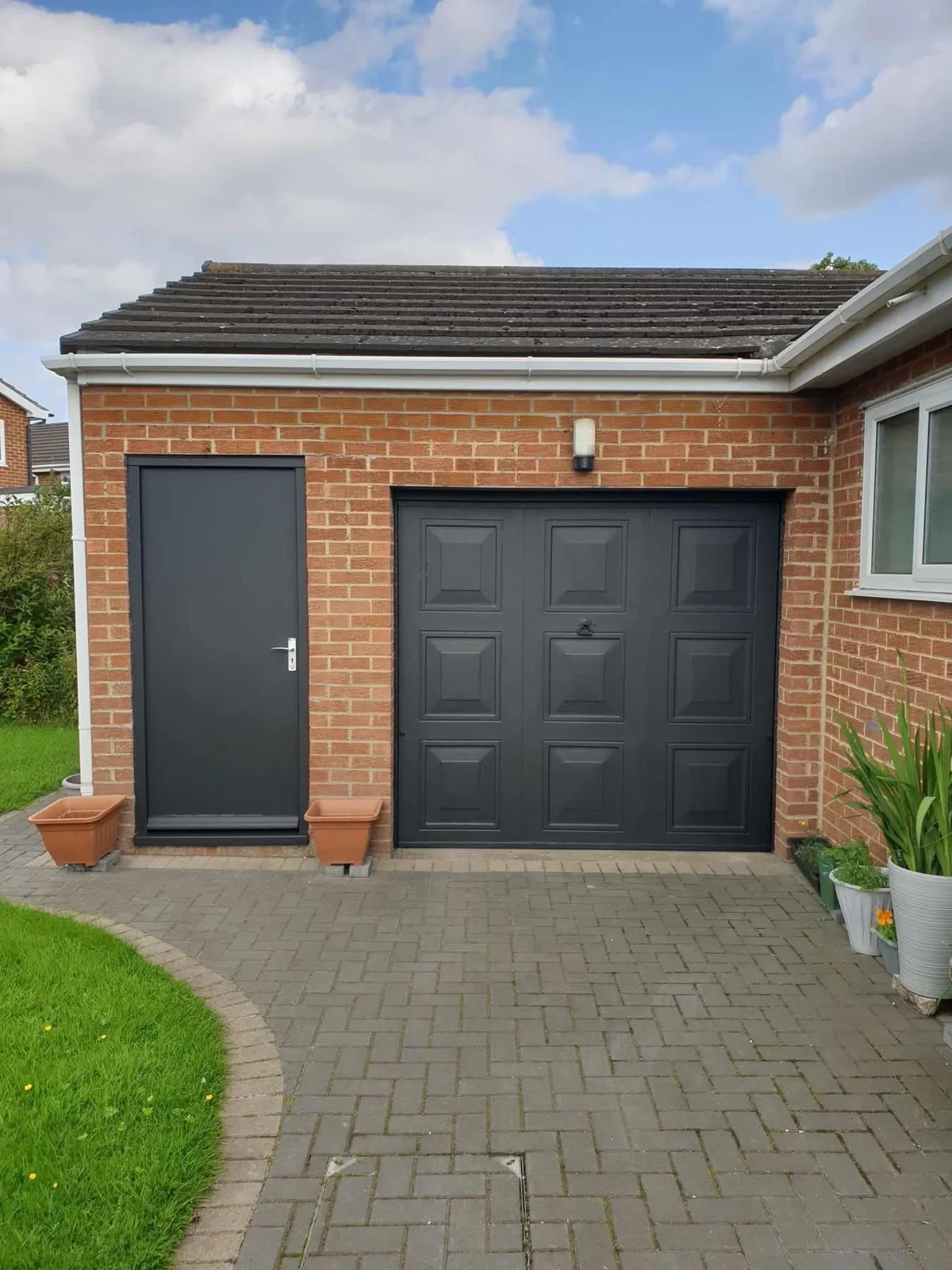
Browse the full project gallery for more preparation and finished-work photographs.
A tall stairwell or open entrance needs more than a calculation of paintable wall area. Safe working access, protection and the routes used by the household all affect the programme. Send photographs that show the height and shape of the space from safe positions. Identify awkward corners, furniture that cannot move and any fixtures close to the surfaces. Do not climb or improvise access simply to provide a measurement. The assessment should establish the working arrangements appropriate to the actual space.
If the property is occupied, explain who needs to pass through the area and at what times. A central staircase may limit how work can be phased, even if the rest of the house is spacious. Discuss practical restrictions before a start date is agreed. For interior painting, ceilings, high walls and trim should each be identified in the scope. Their preparation and access requirements may differ. A clear programme respects those differences instead of assuming a large house automatically provides unlimited working space or that every surface can be reached and finished in the same way.
A multiroom project can be approached in stages, but the boundaries should make sense visually and practically. A continuous ceiling, a full hallway wall or matching trim across several doors may need considering together. Decide whether your priority is returning individual rooms to use quickly or completing similar surfaces across the house as one stage. Each choice has implications for movement, protection and repeated setup. Share the preference before the quotation is prepared so the programme can be based on it.
A written surface and colour schedule helps maintain continuity when work is phased. Record which rooms are included now and which may follow later. If a final colour choice could change between phases, consider how it meets the completed work. Product availability and later batches may also make long-term matching less straightforward than expected. Matthew can discuss the proposed sequence without guaranteeing that a future small extension to the job will be invisible. The aim is a coordinated result with realistic decisions about boundaries and timing, rather than treating each stage as an isolated repaint unrelated to the finished whole.
A house with many similar doors can make the woodwork scope sound simpler than it is. Count and identify doorfaces, edges, frames and associated architraves, then list skirting and other trim separately. Explain which parts are excluded and where a new finish will stop at adjoining rooms. If ironmongery is being replaced or doors adjusted, arrange those details before final coats where possible. New handles can expose old holes or marks that were not obvious with the original fitting in place.
Existing coatings need suitable preparation even when the final colour remains similar. Grease around handles, polished wear points and chipped corners can require different attention from clean, sound surfaces. Manufactured board and timber may also need different treatment beneath an apparently uniform finish. Discuss the result you want and the condition you have, rather than assuming all the doors can be treated identically. Newly finished trim should be handled and cleaned in accordance with the chosen system’s curing guidance. Everyday access and the visual specification both belong in the plan so the finish is not put under heavy use before it is ready.
Media walls, wardrobes, shelving and cupboards can become a strong visual feature, particularly when they share a colour with adjacent walls. The matching appearance does not remove differences in substrate. Timber, manufactured board, filled joints and existing factory coatings need assessing. Where the installation is new, obtain material information and identify unfinished joinery or movement before decorating. Paint cannot replace a structural repair or finish a joint that should first be corrected by the installer.
For selected suitable items, spray painting can be considered alongside the protection and working conditions. Describe the entire unit, including interiors or exposed backs if those are part of the intended scope. Empty shelves and cupboards under an agreed arrangement so preparation is not restricted by belongings. The surrounding room matters too: fixed equipment and surfaces that cannot be disturbed influence the plan. After completion, follow the guidance about returning heavy contents or placing objects in prolonged contact. A smooth appearance at the end of application does not mean a coating has already reached full cure.


Browse the full project gallery for more preparation and finished-work photographs.
A cabinet colour is seen beside worktops, tiles, flooring and light fittings, not against an empty design board. Compare samples with those materials in the actual kitchen, including under artificial lighting. Identify what will remain and what is being replaced so the intended scheme is clear. The technical suitability of the cabinets should be assessed at the same time. Door construction, existing coatings, lifting coverings and swollen edges can change whether a respray is appropriate, regardless of how appealing the chosen colour looks.
For kitchen cabinet resprays, clarify doors, end panels, plinths, exposed frames and hardware. A broad instruction to repaint the kitchen can leave these components unresolved. Explain any plumbing, appliance or worktop changes so the decorative stage fits the refurbishment sequence. Suitable preparation and masking are still required; spraying is not a shortcut around material condition. Ask how kitchen use will be managed during the work and what care is needed afterwards. The finished appearance should be supported by a practical plan for application, drying and curing, not simply a photograph of the desired colour.
A large wall does not automatically need a large pattern, and a smaller room does not automatically exclude one. The relationship between design, furniture and viewing distance matters. Decide what the wallpaper should do: create a focal point, add texture or make a defined part of an open space feel separate. Share the intended furniture layout and any feature you want the design centred around. A considered plan looks at the whole wall, including openings and returns, rather than only its central rectangle.
Before ordering for wallpaper hanging, provide product details, hanging instructions, repeat and room measurements. Matching and trimming can affect quantities substantially, so wall area alone is not enough. The substrate also needs assessment. Old paper, adhesive residue and uneven repairs may require preparation before the design can be installed. Agree the surrounding paint finishes and work sequence so preparation does not disturb completed paper. If the material is specialist, allow its specific instructions to shape the plan. The quality of the result depends on respecting both the design and the surface beneath it.
Busy family areas, entrance routes and dining spaces may benefit from finishes selected with cleaning in mind. Describe where marks occur and how the room is used. Durability is not an absolute promise: preparation, application, curing and cleaning method all influence performance. A highly durable product on an unstable base is not a dependable specification. Nor does a washable label mean a new coating should immediately be scrubbed with a strong cleaner.
Consider practical changes that reduce wear after decoration. Furniture pressed against walls, chair backs rubbing at a fixed point or heavy objects repeatedly striking a corner can damage many finishes. A small layout change may help the new surface last better than relying on a different sheen alone. Ask about care for the particular products used and retain their references. If a mark appears early, seek advice rather than repeatedly rubbing the same spot. The finish should be chosen for the way the room works, while its maintenance follows the actual manufacturer’s guidance instead of assumptions based on a marketing description.
Exterior decorating begins with the condition of the masonry or joinery, including old coatings, damage and moisture. Identify the surfaces involved and explain where peeling or staining occurs. A weathered area may need different preparation from a stable faded one. If repair work is planned, discuss its sequence before final painting. A leaking gutter or failing timber detail should not be hidden by a new finish and left to damage it again.
For exterior painting in Wynyard, access arrangements are part of the brief. Mention gates, shared areas, parking, planting and any fixtures close to the work. Application and drying need suitable conditions under the coating instructions, not merely a convenient date. Shaded surfaces may retain moisture differently from sunny ones. Outdoor timings can therefore require flexibility. Matthew can discuss suitability and a proposed approach after assessment, without promising that every elevation can be completed in any weather or that all materials around a house should receive the same product.
At completion, review the surfaces included in the agreed scope under normal lighting and ask about anything unclear. Return furniture carefully, avoiding pressure or accidental scraping against new coatings. If a room has been cleared for the work, plan the return of large items rather than allowing the final move to become the first source of damage. Keep delicate objects and adhesive accessories away from new finishes until the relevant guidance permits their use.
Retain the final colour schedule, product references and care instructions. These records are particularly valuable where several similar shades or different coating systems have been used. Leftover material, if retained, should be labelled and stored as directed; it is not a guarantee of an invisible repair indefinitely. Age, light exposure and cleaning can affect later touch-ups. A complete wall or panel may need repainting for consistency. Understanding that limitation supports sensible maintenance and helps a future enquiry start with useful information rather than an unknown finish and a guess at the original shade.
Give Matthew the postcode, room and surface list, photographs and an outline of the desired result. Include high spaces, defects, fitted units and any work by other trades. Explain occupancy and essential routes, along with your preferred period and any firm deadline. If several people are making decisions, identify who can approve colours and changes. Suitability and current availability are confirmed directly for the actual address and scope, rather than assumed from a general service-area description.
For a free, no-obligation quotation from Matthew Robinson Painting & Decorating, call 07763 095929 or use the enquiry form. The gallery provides real examples of preparation and finished work to help explain preferences. Those examples do not establish a local commission or a universal specification for every Wynyard home. Review the proposed scope before accepting, including exclusions, material responsibility and access. A coordinated decorative result starts with those practical decisions as well as the colours you would like to see on the walls.
YOUR WYNYARD PROJECT
Project-specific advice starts with the actual surfaces, access and finish you have in mind.
Yes, you can enquire about a coordinated group of rooms. List each space and its walls, ceiling, trim and special features. Explain whether you want all areas available together or a phased programme. Connected surfaces and repeated setup affect planning, so the scope should describe the practical sequence as well as the final colour scheme.
Its height, shape and access arrangements need considering as part of the quotation. Photographs from safe positions help explain the layout, but do not improvise access to provide measurements. Tell Matthew which routes must remain usable. The appropriate working arrangement follows the actual space rather than a simple calculation of wall area.
Keep an agreed written schedule showing each product, colour reference, finish and assigned surface. View samples together in the actual connecting rooms before finalising. Broad labels such as pale stone are not precise enough when several shades are involved. A clear record helps everyone make consistent decisions and provides useful maintenance information later.
The appropriate method depends on material, construction, existing finish and the surrounding working conditions. Spraying may be suitable for selected items, but it still requires preparation and protection. Share photographs and material details before choosing the method. The decision should support the agreed result instead of assuming one technique is always preferable.
Discuss the essential room and access routes before the programme is agreed. A phased arrangement may be feasible, but movement of furniture, equipment, protection and drying requirements affect it. Do not assume normal access through every working area. The plan needs to fit the household and actual scope, not simply the number of rooms available.
You can explore colours, but material and condition should be checked before committing to a respray plan. Swollen edges, lifting coverings or failing joints may make components unsuitable. Compare any shortlisted shade with retained worktops and flooring. Technical suitability and the wider visual scheme should be considered together, rather than allowing one attractive sample to decide everything.
Light travelling close across a surface can emphasise texture and unevenness that softer lighting hides. Existing repairs may also differ from the surrounding wall. Show the lighting you intend to keep during assessment. Preparation and finish selection can then be discussed against real viewing conditions, with realistic expectations about the substrate and proposed result.
The intended layout can be considered, subject to wall dimensions, product repeat and material allowance. Explain which furniture or feature should anchor the design. Centring one motif may affect joins elsewhere, so the whole wall needs planning. Confirm quantities before ordering rather than assuming a pattern will align without additional matching or trimming.
No. Touch-dry and fully cured are different stages. Follow the specified product’s instructions before cleaning or putting the surface under heavy use. Strong cleaners and repeated scrubbing may alter a finish, particularly early on. Ask about the appropriate care method rather than treating a durability description as permission for immediate aggressive cleaning.
Send the postcode, rooms, surfaces, photographs and a description of the existing condition. Mention high spaces, restricted access, other trades, occupancy and timing constraints. Identify materials already purchased and the person authorised to make decisions. This creates a useful starting brief, while the final preparation and programme depend on assessment and the agreed scope.
EXPLORE NEARBY
Compare decorating services, read customer feedback, or view Matthew’s project gallery.
FIND YOUR AREA
Explore town, village and neighbourhood guides. Confirm your postcode and the work required when asking about a visit.
LET’S PLAN YOUR PROJECT
Send the rooms or surfaces involved, your postcode and preferred timing. Matthew can then discuss the next step towards a free, no-obligation quotation.
Request your free quoteKIND WORDS. BEAUTIFUL HOMES.
★★★★★ 5.0 on Google · 19 reviews
We recently had Matt from Attention to Detail complete work on our hallway and staircase, and we honestly couldn’t be happier with the results.…Read reviews on Google ↗
Attention to Detail is certainly Matt. He has decorated my hall/stairs, lounge and kitchen. I could not fault his work and professionalism.Read reviews on Google ↗
Matt recently decorated our new interior doors, architraves and door frames, and the standard of his work was outstanding.Read reviews on Google ↗
Matt goes above and beyond and his attention to detail literally is perfection!Read reviews on Google ↗
We had Mathew of ATD (Attention to Detail decorating) to prepare and decorate our hall, stairs, and landing, as well as our large front…Read reviews on Google ↗
Matt I cannot recommend enough the name says it all, attention to detail to a fine T!Read reviews on Google ↗
Matthew has done 5 rooms in total for me, he worked above and beyond to perfection. He is very professional.Read reviews on Google ↗
We have used Matthew a few times for different rooms and houses.Read reviews on Google ↗
Matt totally transformed my living room after I had a media wall built.Read reviews on Google ↗
Amazing and Professional from start to finish!Read reviews on Google ↗
Have had Matthew from Attention to Detail in to paint our bathroom and he did an amazing job.Read reviews on Google ↗
I’ve used Matt a couple of times for work in my house, and not once did he let me down even at short notice.…Read reviews on Google ↗
I have used Attention to detail a number of times and Matty has almost decorated my whole house plus frenchic’d some furniture for me.…Read reviews on Google ↗
Excellent service and excellent job completed. Matt certainly lives up to his company name with attention to detail and a high standard of work.Read reviews on Google ↗
This is the second time I have used ATD, and for an even bigger job.Read reviews on Google ↗
Matt decorated all of my bungalow, excellent work very professional would highly recommend himRead reviews on Google ↗
Used ATD recently to redecorate my hall,stairs, and landing, I would recommend this lad anytime he's very thorough clean and tidy worker above all…Read reviews on Google ↗
Excellent service, very professional, went the extra mile. Lovely guy 👍Read reviews on Google ↗
Matt has just painted our media wall for us and did a fantastic job.Read reviews on Google ↗