
Kirsty Littlefair
Google review★★★★★
We recently had Matt from Attention to Detail complete work on our hallway and staircase, and we honestly couldn’t be happier with the results.…Read reviews on Google ↗
MATTHEW ROBINSON PAINTING & DECORATING
Painting and decorating enquiries in New Marske. Staged home refreshes, move-in decorating and room-by-room planning. Contact Matthew Robinson Painting & Decorating for a tailored quotation.
Tell Matthew your postcode and project details so coverage, suitability and availability can be confirmed.

A house does not have to be decorated all at once to feel more settled. You might begin with the main bedroom, make the living room comfortable next, then return to the hall when other work is complete. Matthew Robinson Painting & Decorating welcomes New Marske enquiries where priorities need arranging into a sensible order. The aim is to agree useful work for the property and the household, rather than assume that a full-home project is always the right first step.
New Marske is one of the three towns in the parish of Saltburn, Marske and New Marske. It has its own identity, and an enquiry should identify the actual postcode rather than use a broad coastal description. The position, construction and present condition of your home determine the decorating questions that matter. A recently repaired room, an occupied family space and an empty house awaiting furniture each need a different practical plan.
This guide looks at staged improvements, moving arrangements and the decisions that help a project stay coherent as it progresses. Explore interior painting and the other service pages, then send your priorities through the project form. Matthew can discuss suitability and the next assessment step before a quotation or availability is confirmed.
A useful priority list separates need from preference. A damaged wall that is ready for repair may be more urgent than a colour you have simply grown tired of. A bedroom needed for everyday use may come ahead of a spare room, even if the spare room would be easier to clear. Write down the rooms involved, the present problems and the reason each matters to you. That makes the first conversation more specific.
Next identify work that depends on another decision. Repainting a wall before planned electrical work could mean repairing it again. Finishing skirting before a floor replacement may expose it to later disturbance. If a kitchen is due to change, its neighbouring walls may be better considered as part of that sequence. Explaining these dependencies helps avoid spending on a finish that is immediately disrupted.
A staged approach should also consider the final relationship between rooms. Keep a record of colours and finish levels so the second stage does not become a fresh guess. You can vary the palette while retaining a consistent detail such as trim colour. The practical benefit is a house that develops deliberately over time rather than a collection of unrelated small projects, each planned without reference to what comes next.
An empty property can provide useful access, but it does not remove the need for preparation or realistic drying time. If you hope to decorate before moving into a New Marske home, explain when access becomes available and whether the date is confirmed. A narrow gap between collecting keys and furniture arriving may not accommodate the scope you initially imagine, particularly if stripping reveals repairs or other work is still underway.
Before requesting a quotation, identify the rooms that matter most for the move. It may be better to complete a few essential spaces properly than rush a larger list. Photographs from a viewing can help start the discussion, but the surfaces may need assessment once access is available. Permission to enter, responsibilities for clearing items and the condition left by the previous occupants should not be taken for granted.
If decorating after moving is more practical, plan storage and safe routes through the house. New furniture and flooring need appropriate protection, and heavily packed rooms may limit access. Tell Matthew about delivery dates and any items that cannot be moved easily. The best sequence is the one that can be carried out properly with the access and time actually available, rather than an ideal schedule that depends on everything going perfectly.
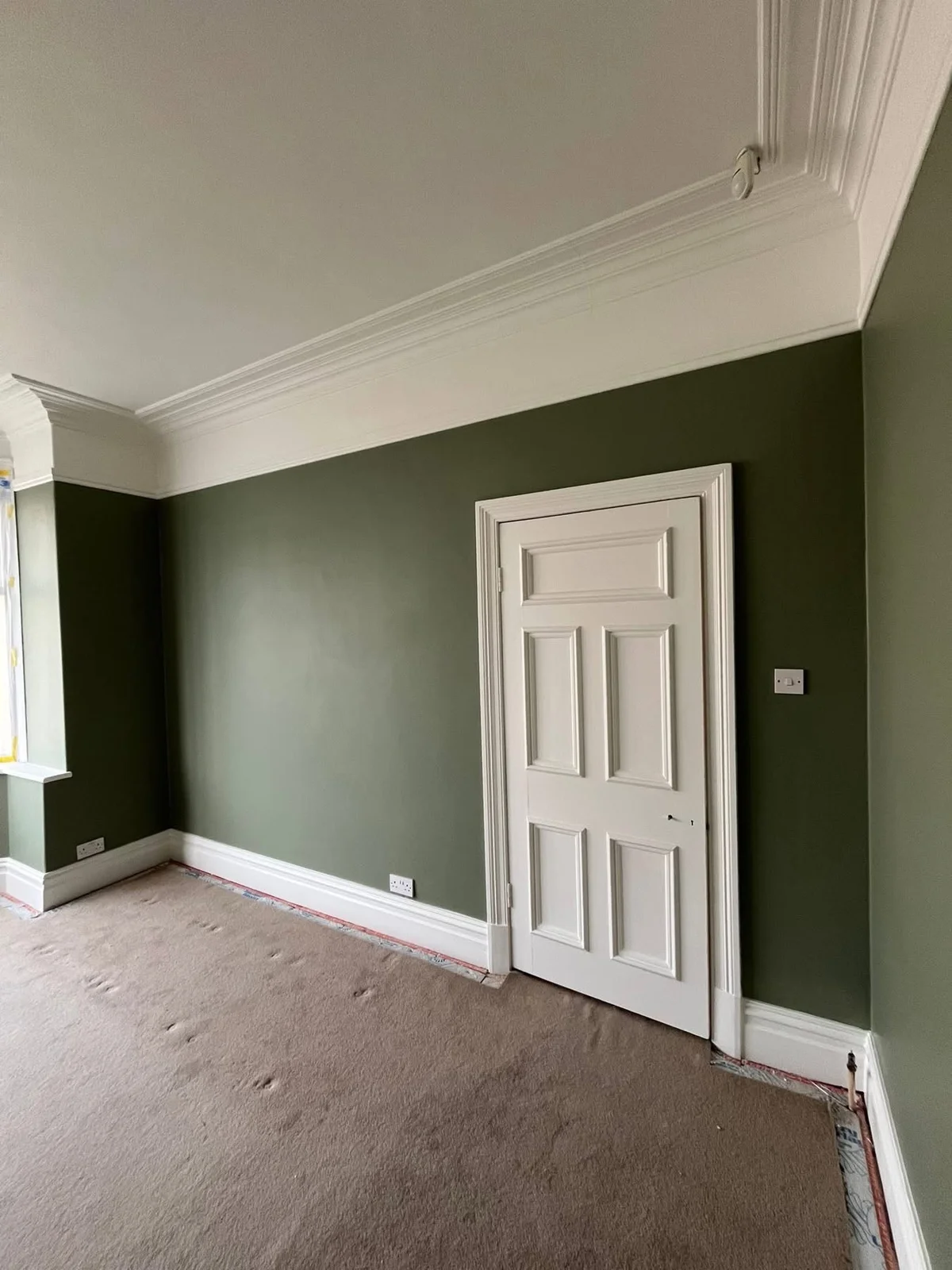
Browse the full project gallery for more preparation and finished-work photographs.
The living room often holds the largest permanent pieces in the home: a sofa, storage unit, fireplace or substantial floor covering. These can be useful anchors for the decorative scheme. Start by considering how you want the room to feel during its main use. A space used mostly in the evening may need different sampling and lighting considerations from one that doubles as a bright daytime workspace.
Choose a manageable shortlist of colours and compare them with the retained materials. Look at the samples near the floor, behind furniture and in any darker corner. A shade that seems restrained on a card can feel stronger across a broad wall. If you want a feature area, decide why that position deserves emphasis and how furniture will frame it, rather than add one simply because it is expected.
The scope should include the ceiling and trim if they need refreshing too. New wall colour can make an older ceiling or worn door frame stand out more. Discuss surface defects, old fixings and any wallpaper to remove before the finish is selected. A coordinated room is as much about sound preparation and complete boundaries as it is about choosing an attractive colour.
A bedroom may need to accommodate more than sleep. It can hold a desk, dressing area, storage or space for a growing child. Consider the furniture plan and likely changes before selecting a decorative treatment that relies on a very specific arrangement. A calm main scheme with a carefully chosen feature can be easier to adapt than a design that only works while every item stays in its present position.
Wallpaper can be used selectively, but it should be planned around the bed, wardrobe and windows. Send the proposed product details if you are considering wallpaper hanging. The wall condition, repeat and roll dimensions influence both preparation and quantity. It is worth checking material availability before the room is scheduled, especially where the design or batch needs to be consistent.
For a painted room, explain the cleaning demands and the present condition of the walls. A busy bedroom still needs a suitable substrate rather than a promise that a particular paint will solve every mark. Agree how clothing, bedding and personal belongings will be stored during the work and when the space can return to use in accordance with the selected products. Practical planning helps the new room feel comfortable from the start.
Old fixing holes, small knocks and previous repairs can become more obvious after a colour change. Side light across a wall may reveal edges that were hidden by furniture or a textured finish. Point these areas out during assessment and explain what bothers you about the present appearance. The level of preparation should be agreed rather than left as a vague expectation that the final coat will make everything flat.
There is a difference between local filling and a more extensive correction of the substrate. Where wall preparation is needed, discuss the extent, the finish you want and whether other repairs must happen first. Active leaks, recurring damp and continuing movement are not resolved simply by repainting. If an area has been repaired recently, provide details where available so readiness for decoration can be considered.
Sheen can influence how imperfections are seen, but it should not be used as the sole response to poor preparation. Choose the final finish for its suitability and the way the room is used, with a realistic understanding of the surface beneath it. If stripping old wallpaper reveals unexpected issues, agree the next step before additional work proceeds and before a final programme is treated as unchanged.
Doors, frames and skirting can connect a staged decorating project even when the walls differ from room to room. A consistent trim colour may help, but the exact surfaces need listing. Count doors, distinguish both faces where relevant and identify window boards or fitted features separately. This is especially important when a single hallway links rooms that will be decorated at different times.
Existing finishes need assessment for adhesion and compatibility. Areas subject to frequent handling may have a different condition from less-used trim. Explain any worn edges, old repairs or planned hardware changes before the preparation is agreed. A new handle with different fixing positions is easier to account for before the final coating than after it has been completed.
For the household, trim work can affect how doors and routes are used. A bedroom door may need to remain available at particular times, while a narrow hallway can make it difficult to keep belongings away from wet surfaces. Discuss these details rather than assume that a room remains fully usable throughout. The coating requirements and the practical sequence should work together, with early-care advice followed after application.

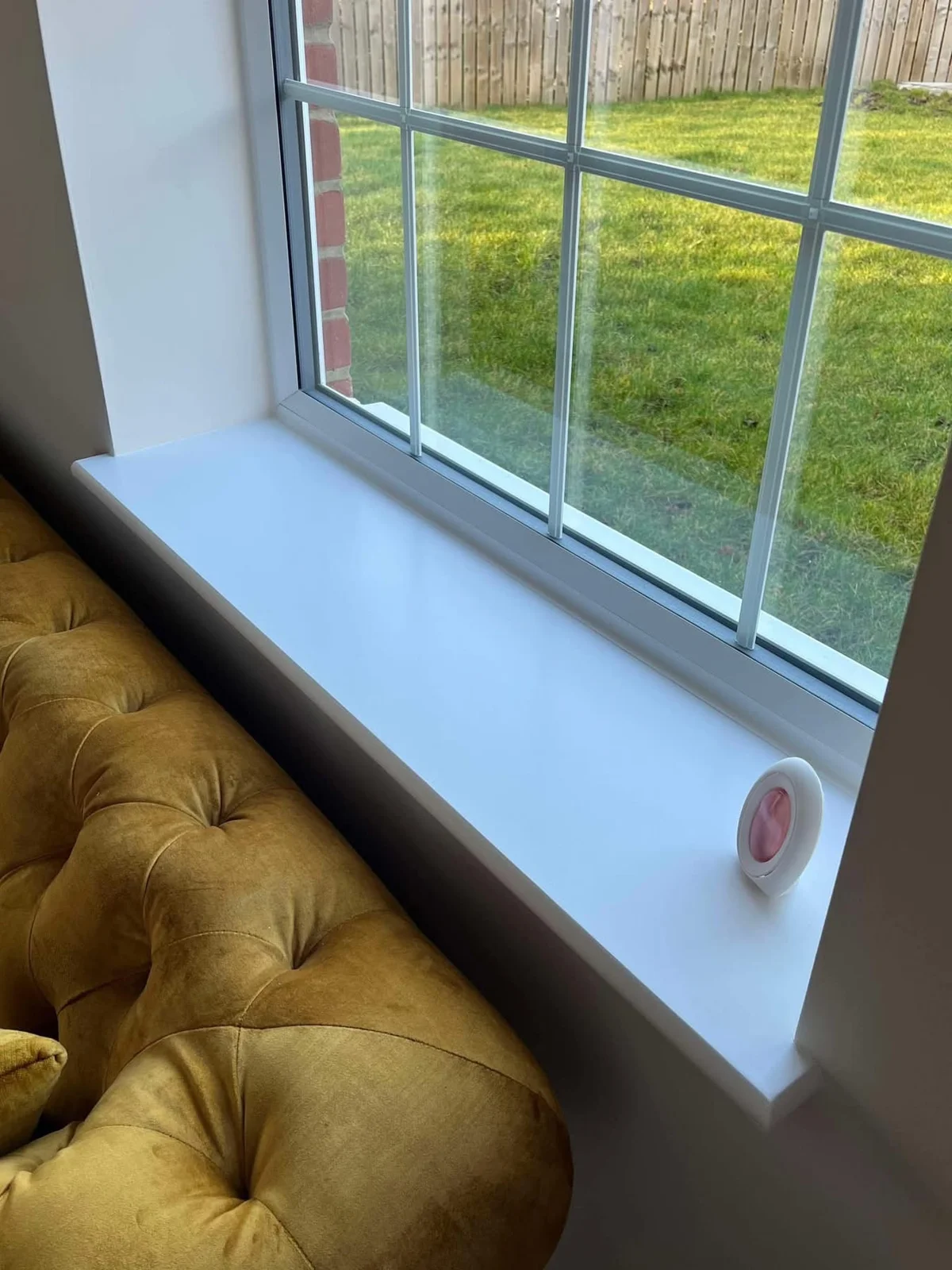
Browse the full project gallery for more preparation and finished-work photographs.
You may not be ready to replace a kitchen but still want it to sit more comfortably with newly decorated rooms. Suitable cabinet fronts can be discussed for a colour change after their material and condition are assessed. Start with the components that will remain, including worktops, tiles, floor and appliances. A new cabinet shade needs to relate to those surfaces, not only to the wall colour in an adjoining room.
For a kitchen respray enquiry, send photographs of the complete kitchen and representative edges and fronts. Identify peeling, swollen areas or other damage honestly. Some defects may require repair or replacement before a decorative finish is sensible. The quotation should clarify doors, drawers, end panels and any internal surfaces so the extent is not assumed from a single overall image.
Think about daily use during the work and the care required afterwards. Food storage, access to appliances and the safe clearing of cupboards need planning. If the kitchen is a later phase, keep earlier colour references so the new scheme can be assessed alongside them. A staged project is most successful when each decision leaves a sensible route for the next one, rather than limiting it accidentally.
An interior programme and an exterior programme may need different timing. Outside, the substrate and selected coating determine appropriate application conditions, and the weather can affect preparation as well as the finish coats. Tell Matthew about the surface position, present coating, recurring failures and access rather than asking for an outdoor date without those details.
A faded coating and a failing substrate are different starting points. Loose material, decay, water ingress and unstable repairs need appropriate consideration before repainting. If another contractor is investigating a defect, explain that and establish the repair sequence. Paint should not be expected to conceal an ongoing problem or make unsuitable material sound. Photographs of the wider elevation and close details can help the initial discussion.
For exterior painting in New Marske, include shared access, planted areas, boundaries and any entrance that must remain usable. Agree the included surfaces precisely and allow flexibility for suitable conditions. If you are staging the whole house, the outside work does not have to follow immediately after the inside simply to make the programme look neat on paper. It needs its own realistic plan.
A quotation is most useful when it describes the phase you are actually ready to undertake. Identify the rooms and surfaces included now, then mention future plans as context rather than allowing them to blur the present scope. This helps explain preparation, materials, access and responsibilities without making an initial project unnecessarily complicated. If priorities change, discuss the revised boundaries before work proceeds.
For a staged move-in project, keep one list of what must be ready for occupation and another of improvements that can follow later. This avoids turning an optional colour change into a deadline that compromises a necessary repair. Confirm who controls access before any working dates are agreed, and tell Matthew when the property will be occupied or furniture delivered. The plan can then reflect real conditions. A clear first stage leaves the home usable and the later work understandable, rather than creating a sequence of rushed decisions driven by the next delivery.
Compare like with like when considering different proposals. One might include stripping, ceiling work and detailed trim, while another is limited to painting sound walls. Those are not equivalent jobs even if both refer to a bedroom refresh. Ask about excluded repairs and how newly revealed defects will be handled. Agreeing a process for changes is more reliable than expecting every concealed surface to be predictable.
To start your New Marske enquiry, call 07763 095929 or email info@mrdecorteesside.co.uk with your postcode, photographs and first priorities. You can also use the portfolio to identify finishes you like, while recognising that each project has its own substrate and requirements. Matthew can then discuss the next step and availability for suitable work, helping turn a long wish list into a clear, manageable decorating project.
YOUR NEW MARSKE PROJECT
Project-specific advice starts with the actual surfaces, access and finish you have in mind.
Yes, explain which rooms or surfaces you want to address first and which are future possibilities. Separate scopes can make priorities easier to compare, although repeated set-up and access arrangements may affect the overall work. Keep the intended final scheme in mind so the first stage does not create avoidable difficulties for the next. Availability for each phase needs confirmation.
An empty house can offer easier access, but the timing must still allow assessment, preparation and drying. Explain when you will have confirmed access and which rooms are essential for moving in. A short gap before delivery may require a smaller initial scope. Do not assume every concealed repair can be identified from viewing photographs or that the preferred dates are automatically available.
Record the exact colour reference, manufacturer and finish used on each surface. Compare new samples in the intended room rather than relying on memory. Existing finishes can change with light and age, so a later touch-up may not disappear even with the same nominal colour. Planning defined walls or sections can be more successful than expecting isolated patches to match invisibly.
Discuss planned electrical work before the decorating programme is agreed. Work that disturbs a wall is generally best coordinated so necessary repairs and preparation happen before the final finish. The responsible contractor should complete and make good their part as agreed. The precise sequence depends on the job, so avoid treating decorating as independent of other changes to the same surface.
Yes. Preparation depends on condition and detail as well as room size. Paper removal, damaged corners, old repairs, multiple doors and restricted access can add work in a small space. Provide photographs and list the surfaces included. A useful quotation explains the actual scope rather than assuming a room with a modest floor area must be a quick or standard-priced job.
Explain the item, its position and the available space before a quotation is prepared. Some arrangements may allow suitable protection and access, while others limit the surfaces that can be reached. Heavy furniture needs a safe agreed plan. The scope should state any excluded areas clearly, rather than leave an assumption that everything behind a fixed or immovable item will be decorated.
It can be considered as a later phase, provided the choices work together. Keep a record of the living-room materials and colours, then compare cabinet samples with the kitchen components that will remain. Suitability of the fronts still needs assessment. A future phase should be planned on its own merits, including daily kitchen access and the care needed after finishing.
Send your postcode, room photographs, the surfaces involved and a description of the result you want. Explain which furnishings and floors will remain and whether any repairs or other trades are planned. An initial discussion can begin without a final shade, but product and colour decisions need to be agreed in time for the relevant materials and work to be organised.
EXPLORE NEARBY
Compare decorating services, read customer feedback, or view Matthew’s project gallery.
FIND YOUR AREA
Explore town, village and neighbourhood guides. Confirm your postcode and the work required when asking about a visit.
LET’S PLAN YOUR PROJECT
Send the rooms or surfaces involved, your postcode and preferred timing. Matthew can then discuss the next step towards a free, no-obligation quotation.
Request your free quoteKIND WORDS. BEAUTIFUL HOMES.
★★★★★ 5.0 on Google · 19 reviews
We recently had Matt from Attention to Detail complete work on our hallway and staircase, and we honestly couldn’t be happier with the results.…Read reviews on Google ↗
Attention to Detail is certainly Matt. He has decorated my hall/stairs, lounge and kitchen. I could not fault his work and professionalism.Read reviews on Google ↗
Matt recently decorated our new interior doors, architraves and door frames, and the standard of his work was outstanding.Read reviews on Google ↗
Matt goes above and beyond and his attention to detail literally is perfection!Read reviews on Google ↗
We had Mathew of ATD (Attention to Detail decorating) to prepare and decorate our hall, stairs, and landing, as well as our large front…Read reviews on Google ↗
Matt I cannot recommend enough the name says it all, attention to detail to a fine T!Read reviews on Google ↗
Matthew has done 5 rooms in total for me, he worked above and beyond to perfection. He is very professional.Read reviews on Google ↗
We have used Matthew a few times for different rooms and houses.Read reviews on Google ↗
Matt totally transformed my living room after I had a media wall built.Read reviews on Google ↗
Amazing and Professional from start to finish!Read reviews on Google ↗
Have had Matthew from Attention to Detail in to paint our bathroom and he did an amazing job.Read reviews on Google ↗
I’ve used Matt a couple of times for work in my house, and not once did he let me down even at short notice.…Read reviews on Google ↗
I have used Attention to detail a number of times and Matty has almost decorated my whole house plus frenchic’d some furniture for me.…Read reviews on Google ↗
Excellent service and excellent job completed. Matt certainly lives up to his company name with attention to detail and a high standard of work.Read reviews on Google ↗
This is the second time I have used ATD, and for an even bigger job.Read reviews on Google ↗
Matt decorated all of my bungalow, excellent work very professional would highly recommend himRead reviews on Google ↗
Used ATD recently to redecorate my hall,stairs, and landing, I would recommend this lad anytime he's very thorough clean and tidy worker above all…Read reviews on Google ↗
Excellent service, very professional, went the extra mile. Lovely guy 👍Read reviews on Google ↗
Matt has just painted our media wall for us and did a fantastic job.Read reviews on Google ↗