
Kirsty Littlefair
Google review★★★★★
We recently had Matt from Attention to Detail complete work on our hallway and staircase, and we honestly couldn’t be happier with the results.…Read reviews on Google ↗
MATTHEW ROBINSON PAINTING & DECORATING
Painting and decorating enquiries in Hutton Rudby. Discuss preparation, interior finishes, wallpaper and your project with Matthew Robinson.
Tell Matthew your postcode and project details so coverage, suitability and availability can be confirmed.

A home does not need a complete redesign every time its finishes become tired. Often the useful project is more measured: address a worn route through the house, improve a bedroom, coordinate a kitchen with adjoining rooms or prepare a surface properly before its next coat. Matthew Robinson Painting & Decorating welcomes enquiries from Hutton Rudby where the scope can be assessed around those priorities. Send your postcode and project details so coverage and arrangements can be confirmed directly.
This page looks at decorating as planned maintenance as well as a visual change. It is relevant whether you want to retain a familiar scheme or introduce a new direction in selected rooms. The age and condition of the property still need individual consideration. A village location does not mean every home has the same plaster, timber or previous coatings, and a sensible specification should follow the actual surfaces rather than assumptions about the area.
To start, explain where the current finish is failing or no longer meeting your needs. Photographs, approximate dimensions and a list of surfaces help establish what should be assessed. Call 07763 095929 or use the project enquiry form. Matthew can discuss suitability and the next step without inventing a fixed timetable, local premises or a record of work at a particular address.
A maintenance review becomes clearer when you look at walls, ceilings, doors and other components separately. One room may have sound paint but worn trim, while another has marks that suggest a preparation issue. Write down what you see and how long it has been present. The purpose is not to diagnose every defect yourself; it is to give the assessment a practical starting point beyond a general statement that the house needs decorating.
Look especially at areas that receive regular contact: door edges, corners beside furniture, the route to the garden and the walls near switches. Note where cleaning has changed the appearance or where previous touch-ups are visible. Those details can help distinguish routine wear from a loose coating or recurring problem. Include both a close photograph and a wider view, as location and access are part of understanding the work.
Do not omit areas because they are less visible. A stain in an unused corner or flaking around a window may need investigation before the decorative programme is agreed. Active moisture and significant building defects require attention at their cause. The quotation should identify what preparation is included and where another trade may be needed. A planned refresh is more useful when it begins with a realistic picture of the property rather than a selective set of its easiest surfaces.
For surface preparation and wall correction, the condition beneath the visible colour matters. Loose paint, unstable patches and remaining wallpaper adhesive cannot be treated as though they were a sound painted wall. Cleaning, filling, abrasion or appropriate priming may form part of the proposed work after assessment. The exact approach depends on what is there and the finish to follow, not on a single standard process for every house.
If a defect returns after previous repairs, describe that history. A crack that repeatedly reappears or a stain that comes through several coats is useful information, even if its cause is not yet known. Decoration should follow any necessary investigation or repair rather than conceal the symptom. A larger plaster issue or continuing movement may need separate advice before finishing can be considered. That boundary should be clear in the scope.
Agree how unexpected findings will be handled. Removing an old wallcovering can reveal earlier alterations or uneven repairs that were not apparent beforehand. The next step should be assessed and discussed before extra work proceeds. This protects the clarity of the project without assuming either that every hidden surface will be perfect or that any discovery must lead to a complete rebuild. A proportionate response begins with an honest assessment of the revealed condition.
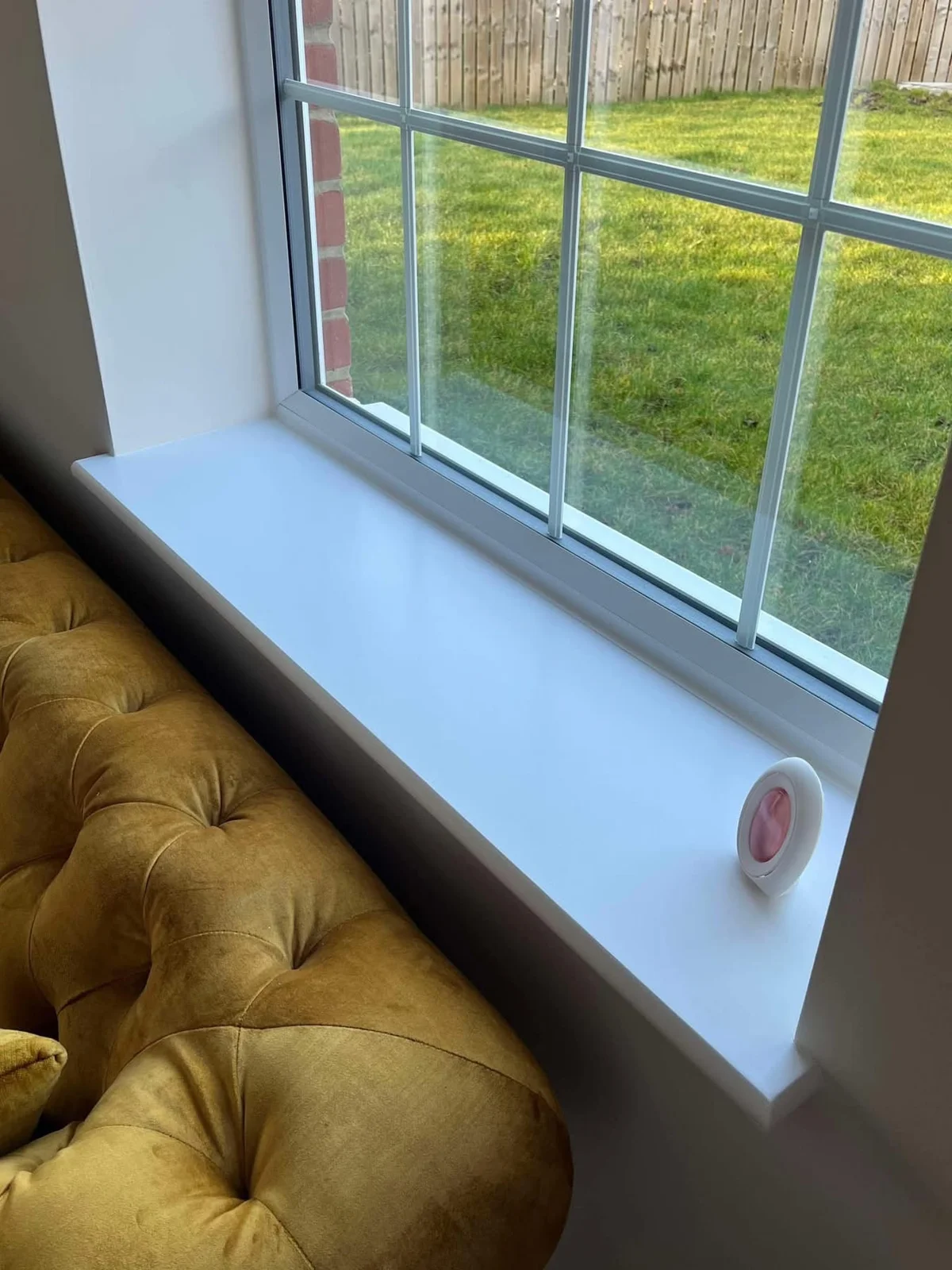
Browse the full project gallery for more preparation and finished-work photographs.
If the current layout and furniture work, a new decorative scheme can focus on balance rather than replacement. Look at the floor, curtains, upholstery and retained cabinets together, then consider which wall colours support them. A room may need less contrast, a clearer focal point or a better connection to the adjoining hall. Those are useful aims to describe before selecting a product or committing to a dramatic change.
For interior painting, test samples where the room’s light actually falls. A colour beside a window can read differently on the opposite wall, and evening lamps can alter the whole impression. Consider the room when it is furnished and in use rather than judge only an empty wall. If you intend to change lighting or major textiles, coordinate those decisions before final colour approval where possible.
Practical wear should guide the finish discussion. Explain where chairs, bags, children or pets regularly contact walls, and how the room is cleaned. A suitable level of cleanability must be balanced with appearance and the condition of the background. A more reflective coating may show defects differently, so it should not be chosen on durability language alone. Record the final colour and product information to support sensible maintenance after the work is complete.
A bedroom refresh can be a self-contained first stage when the whole home does not need decorating together. Decide whether the work includes ceiling, woodwork and fitted storage as well as walls. A new wall shade can make old trim appear more worn, so consider those relationships before treating the scope as settled. A complete room plan can still be modest; its value comes from knowing which elements are deliberately retained.
Think about the room’s two ends of the day. Daylight may suit one shade, while bedside lamps create a different mood at night. Test samples in both situations and alongside bedding or curtains where practical. If a feature wall is intended behind the bed, check the view from the doorway and any desk or chair. The room should feel coherent from the places you use, not only from the angle of an inspiration image.
Clearance needs agreement before the programme starts. Explain whether another room is available for sleeping and where furniture can go. Full wardrobes and heavy beds may restrict access more than expected, even in a reasonably sized room. Follow the advice on drying and curing before returning furniture close to painted surfaces. A room can look finished while its coating still needs gentle use, so the return to normal living should form part of the practical plan.
A considered paper can add texture or pattern while leaving most furnishings unchanged. Begin by deciding where it belongs and why: framing a bed, giving a dining area identity or bringing warmth to a retained sitting room. Review its scale and contrast over a larger area than a small sample where possible. A design that appears subtle in a hand can become much stronger across a full wall.
For wallpapering, provide the product instructions, roll size, repeat and batch details. Wall dimensions and openings help establish quantity, but pattern matching and cuts mean a basic area calculation may not be enough. Explain furniture positions and any central feature so placement can be considered before hanging. Ordering the correct material is part of planning, not a detail to leave until the room is already prepared.
The background needs to be sound and suitable. Old adhesive, loose paint and uneven repairs may need attention, and lining can be considered where appropriate. None of those steps replaces resolution of active moisture or unstable plaster. If you want to strip the wall yourself, discuss the plan and allow time to assess what is revealed. Keep suitable spare material and the specification afterwards, while recognising that future repairs still depend on condition and the way the paper has aged.
Woodwork can provide continuity between rooms even where wall colours change over time. Inspect the existing finish around handles, hinges, skirting corners and door edges. Count the items you want included, and specify which faces and surrounding frames belong to the project. A small room with several openings can involve a significant amount of detailed trim work, so room size alone is not a reliable description of the scope.
Preparation follows condition. Sound earlier coatings need a different response from peeling layers, bare repairs or a sticky finish. Suitable cleaning, abrasion and primers may be required before finishing coats. If the component itself needs adjustment or repair, that should be distinguished from decoration. A new coating can improve appearance, but it does not correct a door’s fit or restore a structurally unsound edge.
Agree how the household will use newly coated components. Rails and doors may be touched repeatedly, and pressing against a finish too early can affect it even after it feels dry. Product-specific care guidance should govern the return to normal use. Keeping the chosen specification also helps if later phases are intended to coordinate with this one. A consistent trim scheme works best when the products are recorded rather than remembered as simply the white paint.


Browse the full project gallery for more preparation and finished-work photographs.
Where storage still works well, a suitable finish change may be a practical part of a room update. Send photographs of the cabinet material, fronts, exposed edges and damaged areas. The existing coating and substrate determine whether further treatment makes sense. Swollen board, loose coverings or other defects should be disclosed rather than covered before assessment, because decoration cannot make every damaged piece a suitable painting surface.
Selected spray finishes can be discussed for appropriate fitted furniture, with masking and room access included in the decision. List internal and external parts separately. A proposal for fronts alone does not automatically cover shelf interiors, undersides or every compartment. Emptying and returning contents may be a significant practical task, so agree responsibilities and the time needed before the unit resumes full use.
For a kitchen, cabinet respraying needs its own component list and condition check. Door fronts, drawers, frames, plinths and panels may differ in exposure and wear. If handles, worktops or appliances will change, explain the sequence before coating is specified. A coordinated room colour can be planned around retained elements, but product and preparation choices must remain appropriate to each surface rather than copied wholesale from the walls.
Exterior decoration is worth considering before deterioration becomes more extensive, but the right response depends on the actual surface. Describe where coatings are peeling, where water runs and which parts stay shaded. Show both the whole elevation and close details. Masonry, timber and other previously coated components may require different systems, while defects such as decay or active water penetration may need another specialist before finishing.
The Rudby neighbourhood planning material identifies a conservation area covering the historic centre of Hutton Rudby. That does not mean every address has identical controls, so check the specific property’s status and proposed changes with the relevant authority where necessary. External colour or material decisions should follow that advice. A decorating quotation is not a substitute for confirmation about listed-building or conservation requirements, and a neighbouring finish does not establish what is appropriate for yours.
Exterior painting also requires a suitable application and drying window. Weather, temperature and manufacturer guidance can change timing, so the programme may need flexibility. If an outside feature is part of a wider indoor refresh, identify it separately rather than assume it can always be completed on the final scheduled day. The assessment should clarify access, preparation, any preceding repair and the coating suitable for the surface.
A staged programme can be useful where the household remains in place or the budget is being managed over time. Choose phases that have clear boundaries and leave usable rooms rather than a little unfinished work everywhere. The first stage might be a bedroom and its trim, while a later phase addresses a circulation area. What matters is that each quotation states the surfaces, preparation, materials and practical assumptions included.
Consider where furniture and possessions will go during each stage. Temporary storage can quickly fill the very room intended for the next phase, so plan the sequence realistically. Tell Matthew about pets, working hours and access needs. Repeated setup or clearance can affect the work involved, meaning separate visits are not necessarily identical to one continuous project divided into smaller payments. Discuss those implications while the programme is being developed.
To request an assessment for Hutton Rudby, send the postcode, photographs, priorities and preferred timing to info@mrdecorteesside.co.uk, or call 07763 095929. The gallery can help explain ideas without claiming a completed local job. The next conversation can establish coverage and suitability, then work towards a scope grounded in your property’s condition and the finish you want to maintain.
YOUR HUTTON RUDBY PROJECT
Project-specific advice starts with the actual surfaces, access and finish you have in mind.
Yes, explain which colours and surfaces you want retained and where wear is visible. The condition of the existing finish and any available product information help the assessment. A local repair or touch-up may not blend invisibly under every light, so the appropriate extent of repainting should be discussed rather than assumed. Renewing a familiar scheme still benefits from a clear specification for preparation and the surfaces included.
Take a wider photograph of each relevant room or elevation, then close images of peeling, stains, cracks or worn trim. Add notes about when the issue began and whether it has returned after earlier work. Approximate dimensions and a surface list are helpful too. You do not need to diagnose the cause; clear observations make it easier to identify what needs assessment and whether another specialist may be required.
Not necessarily. Condition, daily use, clearance and the relationship to other work can change the priority. A room that looks tired may still have sound surfaces, while a smaller area has a defect needing attention before decoration. Explain your priorities and practical constraints, then compare sensible complete phases. The aim is to make the first stage useful and clearly scoped rather than choose solely by the strongest visual dislike.
That depends on the background, the cause of the marks and the preparation undertaken. A different finish does not automatically correct texture changes, loose coatings or uneven previous touch-ups. Describe how the wall has been cleaned and what remains visible. Matthew can discuss suitable preparation and products after assessment. Cleanability should be considered alongside appearance and care guidance rather than used as a promise that all future marks will disappear.
A focused papering project can be discussed if the background is suitable and the boundaries are clear. Consider how the new paper will relate to the existing ceiling, trim and adjacent paint, as those surfaces may appear different once the feature is installed. Provide the product instructions and wall details before ordering. Preparation, pattern layout and any stripping still need allowance even when only one wall is included.
Decoration should not be treated as a structural repair. A sound, suitable unit may be considered for a finish change, but swelling, failing coverings or damaged edges can make coating inappropriate without prior work. Send honest photographs before attempting to conceal defects. Repair or replacement may need assessment by another trade. The decorating quotation should identify the suitable surfaces and not imply that paint restores every component to a sound condition.
No. The historic centre includes a conservation area, but the exact property, its status and the proposed change matter. Check with the relevant authority where there is uncertainty, especially around listed buildings or historic external details. Do not rely on a neighbouring colour as evidence of permission. Agree the decorating specification after any applicable requirements are understood, because the quotation itself does not determine consent.
Keep a simple room record with the approved colour, product, sheen and surfaces treated, along with any wallpaper details and care advice. Store that information where it can be found for the next enquiry. Later work still needs its own assessment, and an intended match can look different with age or lighting, but a reliable specification is more useful than guessing from an old tin or a remembered colour name.
EXPLORE NEARBY
Compare decorating services, read customer feedback, or view Matthew’s project gallery.
FIND YOUR AREA
Explore town, village and neighbourhood guides. Confirm your postcode and the work required when asking about a visit.
LET’S PLAN YOUR PROJECT
Send the rooms or surfaces involved, your postcode and preferred timing. Matthew can then discuss the next step towards a free, no-obligation quotation.
Request your free quoteKIND WORDS. BEAUTIFUL HOMES.
★★★★★ 5.0 on Google · 19 reviews
We recently had Matt from Attention to Detail complete work on our hallway and staircase, and we honestly couldn’t be happier with the results.…Read reviews on Google ↗
Attention to Detail is certainly Matt. He has decorated my hall/stairs, lounge and kitchen. I could not fault his work and professionalism.Read reviews on Google ↗
Matt recently decorated our new interior doors, architraves and door frames, and the standard of his work was outstanding.Read reviews on Google ↗
Matt goes above and beyond and his attention to detail literally is perfection!Read reviews on Google ↗
We had Mathew of ATD (Attention to Detail decorating) to prepare and decorate our hall, stairs, and landing, as well as our large front…Read reviews on Google ↗
Matt I cannot recommend enough the name says it all, attention to detail to a fine T!Read reviews on Google ↗
Matthew has done 5 rooms in total for me, he worked above and beyond to perfection. He is very professional.Read reviews on Google ↗
We have used Matthew a few times for different rooms and houses.Read reviews on Google ↗
Matt totally transformed my living room after I had a media wall built.Read reviews on Google ↗
Amazing and Professional from start to finish!Read reviews on Google ↗
Have had Matthew from Attention to Detail in to paint our bathroom and he did an amazing job.Read reviews on Google ↗
I’ve used Matt a couple of times for work in my house, and not once did he let me down even at short notice.…Read reviews on Google ↗
I have used Attention to detail a number of times and Matty has almost decorated my whole house plus frenchic’d some furniture for me.…Read reviews on Google ↗
Excellent service and excellent job completed. Matt certainly lives up to his company name with attention to detail and a high standard of work.Read reviews on Google ↗
This is the second time I have used ATD, and for an even bigger job.Read reviews on Google ↗
Matt decorated all of my bungalow, excellent work very professional would highly recommend himRead reviews on Google ↗
Used ATD recently to redecorate my hall,stairs, and landing, I would recommend this lad anytime he's very thorough clean and tidy worker above all…Read reviews on Google ↗
Excellent service, very professional, went the extra mile. Lovely guy 👍Read reviews on Google ↗
Matt has just painted our media wall for us and did a fantastic job.Read reviews on Google ↗