
Kirsty Littlefair
Google review★★★★★
We recently had Matt from Attention to Detail complete work on our hallway and staircase, and we honestly couldn’t be happier with the results.…Read reviews on Google ↗
MATTHEW ROBINSON PAINTING & DECORATING
Painting and decorating enquiries in Ingleby Barwick. Thoughtful colour planning, family rooms and preparation before painting. Call Matthew Robinson on 07763 095929 for a free quotation.
Tell Matthew your postcode and project details so coverage, suitability and availability can be confirmed.

A house can be sound and well arranged yet still feel unfinished because the colours, woodwork and room transitions were never chosen together. Painting and decorating in Ingleby Barwick is an opportunity to look at how the whole home feels, even when only one part is changing. Matthew Robinson Painting & Decorating welcomes enquiries for individual rooms, connected living spaces and carefully planned refreshes. The starting point is your property and the way you use it, rather than a standard palette applied to every address.
Ingleby Barwick is recognised as a distinct community within Stockton-on-Tees, with council information identifying northern and southern areas. That broad identity does not tell a decorator what lies beneath the paint in any particular house. New plaster, earlier repairs, papered walls and heavily used woodwork can all appear in the same home. Tell Matthew what has changed since the rooms were last decorated, whether you have recently moved in and what is staying. A clear description helps turn a general wish for a fresh look into a sensible list of surfaces and decisions.
Before collecting dozens of paint samples, identify the elements you are keeping. Kitchen worktops, floor coverings, fitted wardrobes and a large sofa often occupy more visual space than a wall colour. Compare samples beside those materials instead of selecting shades against a blank white background. If your downstairs rooms connect, look through the doorways and consider where the scheme should flow and where a deliberate change would make the space easier to read. A coordinated home does not need every room painted identically.
Samples should be viewed in daylight and under the lighting used in the evening. A colour that suits a bright kitchen can behave quite differently on a landing. Also review the sample on more than one wall because light rarely falls evenly through a room. Record the final product, colour reference and intended sheen rather than relying on a photograph, which may alter the shade. If decisions are shared between household members, agree one written schedule before materials are ordered. This avoids contradictory instructions once the rooms are already protected and preparation has started.
When a house has fine cracks around joins or recently altered rooms, it is tempting to describe everything as normal settling. Some small defects can be dealt with during preparation, but the cause and behaviour matter. Let Matthew know if a crack is growing, returning after repair or accompanied by sticking doors, moisture or movement. Decorating is not a substitute for diagnosis where another building issue may be present. Keeping the evidence visible helps the appropriate preparation or referral be discussed.
A recently plastered wall also needs a different approach from an established painted one. Its dryness, condition and suitability for the proposed coating should be checked. New plaster should not be judged ready simply because the surface colour looks lighter. Follow the relevant material and paint-system guidance, and explain when plastering or building work took place. The surface preparation service can be discussed for suitable minor correction, filling and smoothing. The desired finish should be agreed with a realistic understanding of the substrate, particularly where strong window light makes small irregularities easy to see.
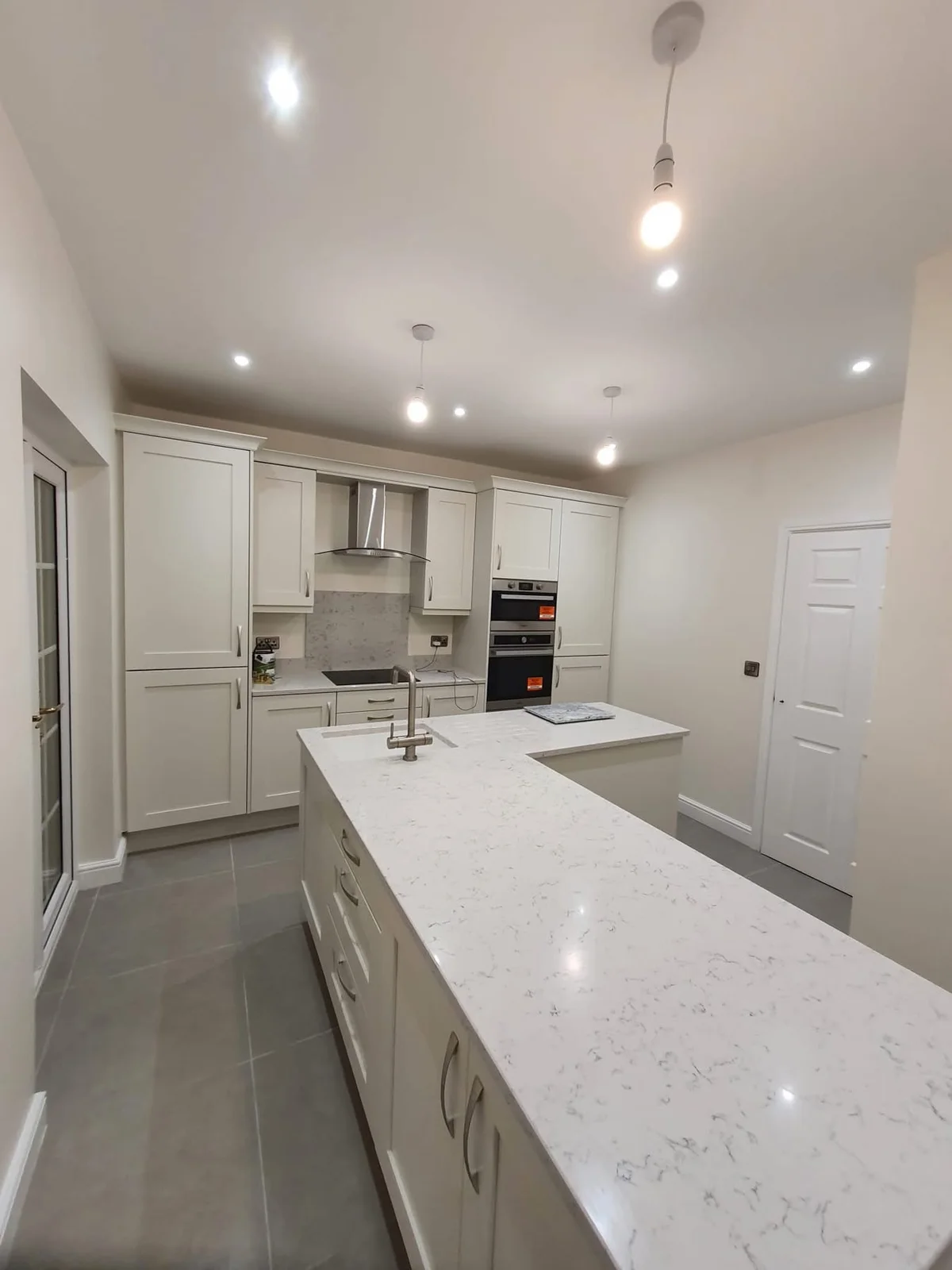

Browse the full project gallery for more preparation and finished-work photographs.
An open kitchen, dining and living space may feel like one room to use but involves several separate decorating conditions. Cooking residues, repaired service chases, different ceiling heights and large windows can all influence preparation and application. List the areas and surfaces included rather than describing the job only as the open-plan room. If a ceiling runs continuously across several zones, establish whether all of it is included. A stopping point halfway across a visually continuous surface can be much more noticeable than expected.
Furniture and access also deserve early planning. Moving everything from one end of the room to the other may sound simple until preparation requires access to every perimeter. Discuss what can be removed, what can be safely protected and whether the kitchen must remain usable. If other trades are changing lighting, sockets or kitchen fittings, settle their work before the final coats where possible. Matthew can consider interior painting in connected spaces, with the programme based on actual access and surface condition. The aim is an organised project, not a promise that a large room creates no disruption.
A family room can face crayons, sticky fingers, chairs brushing walls and toy storage rubbing against skirting. Explain that use when discussing finishes. The right specification is a balance of appearance, cleanability and the condition of the base, not simply the highest sheen available. A washable product still has instructions for application, curing and cleaning. Harsh cleaners or repeated scrubbing on one small area can alter a finish, so aftercare is part of maintaining the result rather than an optional extra.
Consider where damage happens most often. A narrow route behind the dining table may need furniture repositioning as much as a different paint. Corners close to a play area may benefit from a more practical layout after the work. Discuss the included repairs before repainting so that dents and loose edges are not mistaken for colour problems. For children’s bedrooms, plan the use of the room while coatings dry and follow the relevant product guidance. No finish should be described as instantly ready for every activity simply because it feels dry to a light touch.
Bedrooms are often chosen for softer colours, but a subdued palette does not hide an uneven wall automatically. Bedhead lighting, reading lamps and fitted wardrobe lights can make patches or roller texture stand out. Identify the lighting you intend to keep and show Matthew any existing repairs. Decide whether ceilings, wardrobe surrounds, doors and skirting belong in the scope. A wall-only quotation can be entirely appropriate, but the effect of unchanged trim should be considered before the scheme is finalised.
If wallpaper is planned behind the bed, decide the design and position before ordering. The centre of the wall may not align with the bed once furniture is placed, and the preferred pattern arrangement can affect material requirements. Share the product instructions for wallpaper hanging and ask about quantities after measurements are checked. If the bedroom needs to remain in use, discuss practical alternatives during the project. Clear bedding, clothing and small possessions from the work area, and agree furniture movement before the start date rather than leaving a crowded room for the decorator to organise unexpectedly.
Internal doors and trim are often treated as a background detail until a new wall colour makes them look inconsistent. Compare the existing finish in daylight and decide whether you want a coordinated update. Clarify whether the quotation covers door faces, edges, frames, skirting or fitted details. If new handles or hinges are being fitted, share that plan early. Changes can reveal marks or holes that need attention, and the sequence should allow joinery adjustments to be completed before the finish coats.
Preparation must suit the coating already on the timber or manufactured board. Some surfaces need cleaning and abrasion; others may require a different primer or more substantial correction. Very worn edges cannot be made physically new with paint alone. Where a surface is unsuitable or damaged, Matthew can discuss the limitation rather than disguise it with a promise. In stairs and landings, include access arrangements and identify which parts are regularly touched. A newly finished handrail needs the care recommended for its coating, not immediate heavy handling because adjoining walls have already dried.
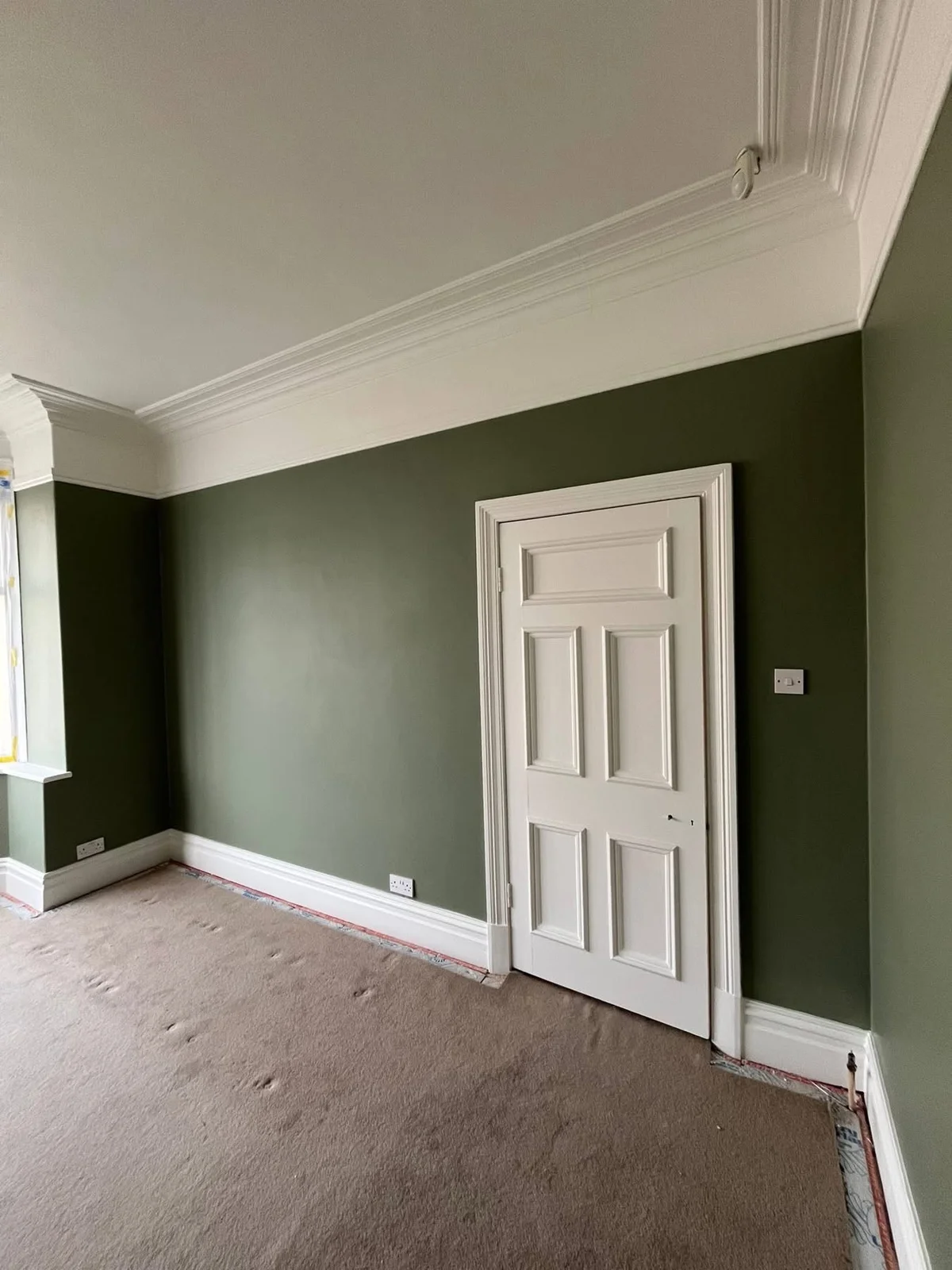
Browse the full project gallery for more preparation and finished-work photographs.
A kitchen colour change can make a significant visual difference, but suitability should come before enthusiasm for a particular shade. Door construction, existing coverings, grease, swelling and worn edges all affect the proposed work. Send close photographs of problem areas and explain whether doors have previously been painted. A finish cannot stabilise a failing foil layer or repair a distorted panel. Those issues should be discussed before deciding whether a respray is a sensible part of the refurbishment.
For suitable units, ask which components are included in kitchen cabinet respraying. End panels, plinths, exposed frames and handles can change the scope considerably. Agree how kitchen use will be managed and what access is needed while preparation and application take place. If worktops, appliances or plumbing are changing, coordinate their sequence with the decorative work. The period after completion matters too: drying and curing are different, so follow the care guidance before hard cleaning, heavy use or attaching accessories to newly finished surfaces.
A feature colour or a painted fitted unit works best when it has a reason within the room. It might connect to a fabric, frame a fireplace or give storage a clearer place in the scheme. Before choosing, consider how much daylight the item receives and how its finish will sit beside existing walls. Review the edges and surfaces closely; a bold colour can emphasise construction irregularities or old repairs just as easily as it can create a striking focal point.
Spray painting may be an option for selected fitted units or furniture, subject to assessment, protection and coating suitability. It is not a universal shortcut. A small object can require extensive masking and preparation, while a complex unit can contain several materials that need different treatment. Describe the item, its present finish and whether it can be moved. Also explain which surrounding surfaces must remain untouched. The specification should account for the full project environment, not only the appearance of a completed unit in a photograph.
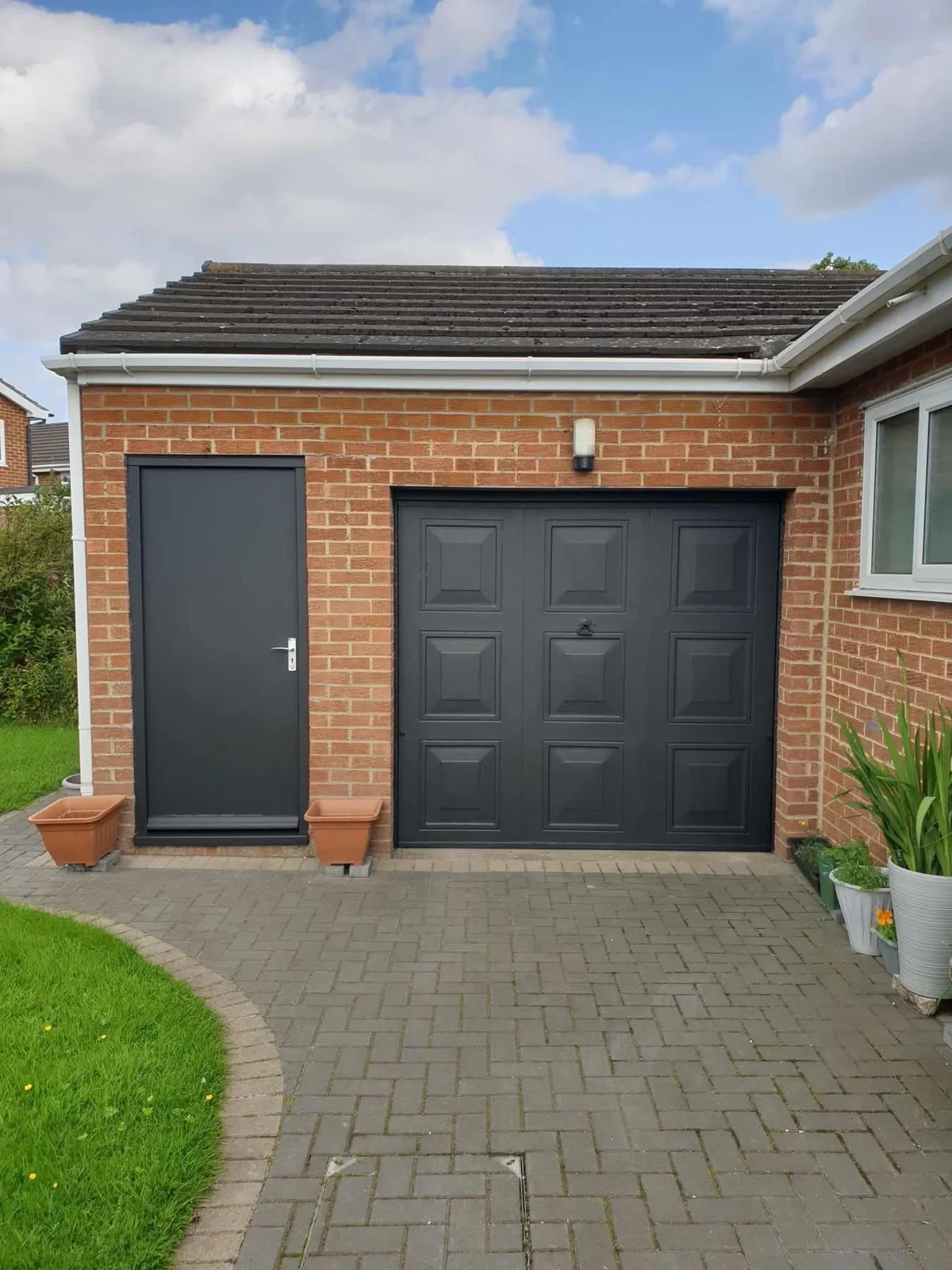
If you are considering internal and external decorating together, recognise that their programmes behave differently. Indoor stages can often be planned around room access, while exterior application depends on substrate condition and suitable weather. A schedule for outside work should not force painting in conditions outside the product instructions. Describe the elevations and joinery involved, any peeling or staining and whether access requires particular arrangements. Include photographs that show the whole surface as well as the defect.
For exterior painting, repairs and maintenance should be addressed before the final decorative system where possible. A leaking gutter or damaged timber can undermine new coatings. Shaded and sunny sides of the same house can also dry differently. Discuss planting, side gates, shared paths and parking because they affect access and protection. The desired result is a finish applied to an appropriate base under suitable conditions. Weather-related flexibility is part of that approach, rather than evidence that all outdoor tasks can be completed to a fixed date regardless of conditions.
To request a quote, provide your postcode, the rooms and surfaces involved, approximate dimensions and a few clear photographs. Include defects, previous repairs and any building work that has recently taken place. Tell Matthew if the property is occupied, which rooms are essential each day and whether you have a preferred period. If a deadline depends on an event or another trade, mention it at the beginning. Current availability and suitability are confirmed directly for the address and work.
Call 07763 095929 or send details through the enquiry form. You can use the gallery to describe finishes you like, remembering that a portfolio example does not establish the specification for your own surfaces. A free, no-obligation quotation should give you a basis for deciding what to do next. Ask about anything unclear, including excluded surfaces, material responsibility and access. When the agreed scope changes, settle the effect before the extra work proceeds so that the finished result matches a shared understanding of the project.
YOUR INGLEBY BARWICK PROJECT
Project-specific advice starts with the actual surfaces, access and finish you have in mind.
You can discuss your aims and the surfaces involved while preparing the quotation. Bring samples or references and identify fixed furnishings you are keeping. Final colours, products and finishes need confirming in time for the work. A reference image is useful for explaining an idea, but the written specification should identify the actual chosen materials.
Not automatically. The appearance should work together, but kitchens, dining areas and quieter corners can face different conditions. Discuss how each zone is used and whether the ceiling or wall runs continuously between them. The surface and coating instructions matter alongside the design, so agree the specification rather than assuming one tin suits every area.
Suitable minor defects can be discussed as part of preparation. Explain whether a crack is new, recurring or changing. Active movement, moisture or another building problem may need investigation first. Painting should not be used to conceal a defect that has not been understood, and no decorative repair can promise to prevent all future movement.
It depends on the holes, fixings, wall condition and finish around them. Tell Matthew what has been removed and provide photographs. Filling, smoothing and priming may be needed before repainting a complete surface. A small painted patch can remain visible because the old coating’s texture, age or light exposure differs from the new material.
Remove small belongings, bedding and delicate items, then agree how larger furniture will be handled. Discuss where the child will sleep during the work and while finishes dry. Keep access to tools and wet surfaces controlled. Ventilation, curing and return-to-use guidance depend on the specified products and should be followed for the actual room.
Possibly, subject to the wardrobe material, existing finish and condition. Matching a colour does not mean using the same coating system on every substrate. Send photographs of doors, edges and any damaged areas. Matthew can discuss whether preparation and a suitable finish are feasible before you commit to the wider bedroom scheme.
No. Cleaning, assessment, abrasion, masking and appropriate priming may still be essential. Spraying is an application method, not a repair for unstable material. The amount of preparation depends on the door construction, existing finish and condition. Ask which stages are included and how kitchen access will be managed during them.
Coordinate the sequence with both trades. Some preparation is easier before flooring, while final fitting can scuff skirting or walls if it happens afterwards. The best order depends on what is being replaced and how access will work. Agree protection and any final touch-up arrangements instead of assuming one rule fits every refurbishment.
Yes, you can enquire about a defined group of surfaces. List the doors, frames, skirting and other details you mean, including which faces and edges are included. Explain any new ironmongery or joinery adjustments. A precise scope helps you assess the quote and prevents assumptions about adjoining rooms or stair details.
Follow the coating manufacturer’s care and curing guidance. Touch-dry does not mean fully cured, and early scrubbing can damage or change the appearance of a finish. Ask for the relevant product information at completion. If a mark appears soon afterwards, seek advice about a suitable cleaning method rather than using a strong cleaner immediately.
EXPLORE NEARBY
Compare decorating services, read customer feedback, or view Matthew’s project gallery.
FIND YOUR AREA
Explore town, village and neighbourhood guides. Confirm your postcode and the work required when asking about a visit.
LET’S PLAN YOUR PROJECT
Send the rooms or surfaces involved, your postcode and preferred timing. Matthew can then discuss the next step towards a free, no-obligation quotation.
Request your free quoteKIND WORDS. BEAUTIFUL HOMES.
★★★★★ 5.0 on Google · 19 reviews
We recently had Matt from Attention to Detail complete work on our hallway and staircase, and we honestly couldn’t be happier with the results.…Read reviews on Google ↗
Attention to Detail is certainly Matt. He has decorated my hall/stairs, lounge and kitchen. I could not fault his work and professionalism.Read reviews on Google ↗
Matt recently decorated our new interior doors, architraves and door frames, and the standard of his work was outstanding.Read reviews on Google ↗
Matt goes above and beyond and his attention to detail literally is perfection!Read reviews on Google ↗
We had Mathew of ATD (Attention to Detail decorating) to prepare and decorate our hall, stairs, and landing, as well as our large front…Read reviews on Google ↗
Matt I cannot recommend enough the name says it all, attention to detail to a fine T!Read reviews on Google ↗
Matthew has done 5 rooms in total for me, he worked above and beyond to perfection. He is very professional.Read reviews on Google ↗
We have used Matthew a few times for different rooms and houses.Read reviews on Google ↗
Matt totally transformed my living room after I had a media wall built.Read reviews on Google ↗
Amazing and Professional from start to finish!Read reviews on Google ↗
Have had Matthew from Attention to Detail in to paint our bathroom and he did an amazing job.Read reviews on Google ↗
I’ve used Matt a couple of times for work in my house, and not once did he let me down even at short notice.…Read reviews on Google ↗
I have used Attention to detail a number of times and Matty has almost decorated my whole house plus frenchic’d some furniture for me.…Read reviews on Google ↗
Excellent service and excellent job completed. Matt certainly lives up to his company name with attention to detail and a high standard of work.Read reviews on Google ↗
This is the second time I have used ATD, and for an even bigger job.Read reviews on Google ↗
Matt decorated all of my bungalow, excellent work very professional would highly recommend himRead reviews on Google ↗
Used ATD recently to redecorate my hall,stairs, and landing, I would recommend this lad anytime he's very thorough clean and tidy worker above all…Read reviews on Google ↗
Excellent service, very professional, went the extra mile. Lovely guy 👍Read reviews on Google ↗
Matt has just painted our media wall for us and did a fantastic job.Read reviews on Google ↗