
Kirsty Littlefair
Google review★★★★★
We recently had Matt from Attention to Detail complete work on our hallway and staircase, and we honestly couldn’t be happier with the results.…Read reviews on Google ↗
MATTHEW ROBINSON PAINTING & DECORATING
Discuss painting and decorating in Coulby Newham with Matthew Robinson. Interior painting, wallpapering, preparation and suitable kitchen resprays. Request a quote.
Tell Matthew your postcode and project details so coverage, suitability and availability can be confirmed.
Decorating a home in Coulby Newham often means balancing the result you want with the rooms you need to keep using. A kitchen may have to remain partly available, a child’s bedroom might need careful timing, and a hallway cannot simply stop being a route through the house. Matthew Robinson Painting & Decorating welcomes enquiries that include these practical considerations from the beginning. Interior and exterior painting, wallpapering, suitable spray finishes, kitchen cabinet resprays and surface preparation can be considered as a defined project rather than a collection of assumptions.
Start by sending your Coulby Newham postcode, photographs and a list of the areas involved. Call 07763095929 or send an online enquiry to discuss suitability and the next step towards a quotation. The council’s neighbourhood planning information recognises Coulby Newham as a distinct local area, but no single description can establish the condition of every home. Your walls, existing finishes, access and everyday routines are the useful facts for planning. The aim is a workable sequence, clear surfaces in scope and finish choices that make sense for how the household actually uses the space.
List the problems you want the work to solve. Perhaps the stairs look tired, the dining wall is repeatedly marked or the kitchen colour no longer fits the rest of the room. Then separate those needs from optional changes. A priority list helps when deciding whether to complete several spaces together or work in stages. It also prevents a small refresh growing into an undefined whole-house project simply because every newly considered surface suggests another. A clear brief can remain flexible without becoming vague.
For each room, identify the surfaces: walls, ceiling, doors, frames, skirting and any fitted units. Note what you expect to stay untouched and which items of furniture cannot easily be moved. If there is a fixed event or another trade booked, explain it early. Timing should be discussed around the real preparation and drying requirements, not worked backwards from an assumption that all rooms can be finished at once. The painting and decorating service overview can help you separate the tasks and ask for options that reflect your priorities.
Hallways, dining spaces and rooms used for play can face a different pattern of wear from quieter areas. The relevant questions are where surfaces are touched, what kinds of marks occur and how you expect to clean them. A wall beside chairs may need a considered maintenance approach; a less exposed wall may be chosen more for its appearance. Discuss the published performance and cleaning instructions of the proposed coating. A broad label such as durable is less useful than understanding what the specific finish is designed to do.
Preparation still matters when a more resistant coating is selected. Loose paint, contamination and uneven repairs can affect the result regardless of the topcoat. A sound base and a suitable product work together. During a colour decision, view samples in the actual room and consider the effect of sheen under both daylight and lamps. A stronger reflection can reveal details that were less noticeable in a flatter finish. For interior painting, explain the room’s use so the conversation covers maintenance and appearance rather than focusing only on the shade printed on a sample.


Browse the full project gallery for more preparation and finished-work photographs.
When planning a child’s bedroom, consider which elements are likely to remain and which may change quickly. A carefully chosen wall colour can work with several bedding or furniture schemes, while a feature wall can provide character without committing every surface to one theme. If you want a patterned wallpaper, think about its scale from the bed and doorway, not just a close sample. Discuss shelving, wall stickers and existing fixings because removing them can expose damage that needs preparation before the room is finished.
Practical arrangements are equally important. Plan where toys, books, clothing and bedding can be stored, and discuss whether the bedroom will be out of use during the work. The coating system, ventilation and curing requirements influence when normal use is sensible. Do not base the programme on an unconfirmed promise that a room can be used immediately after painting. If several bedrooms are included, staging may provide a more manageable route. Matthew can discuss the sequence with you, but the final plan should reflect the actual project and available dates rather than a standard timetable applied to every household.
Halls, stairs and landings often require more coordination than their floor area suggests. They connect doors, corners, skirting, handrails and changes of level, and they remain circulation routes while the work takes place. Before asking for a quotation, list which elements you want included and point out high areas or access constraints. State whether the stair components, underside, ceilings and internal doors are part of the brief. Counting a hallway as one room can conceal a considerable amount of detailed preparation and finishing.
Talk about when people need to leave, return or move between floors. Shoes, coats, bags and other items may need temporary storage so the work area can remain accessible. If other trades are also using the route, their tasks should be coordinated before finished surfaces are put at risk. Agree a colour and sheen for connected trim with the adjoining rooms in mind. The result should make sense at every doorway, not only from the front entrance. A written surface list is a simple way to keep those expectations clear throughout the quotation and planning stages.
Small knocks, removed hooks and scuffed corners may be suitable for routine preparation, but recurring cracks or staining need a more careful conversation. Explain when defects appeared and whether they have been repaired before. A photograph of a crack is more useful when accompanied by its history; a stain needs information about any leak or damp investigation. Decorating should follow appropriate repairs and drying, rather than being used to hide a cause that is still active.
Walls uncovered after paper stripping can introduce additional uncertainty. Tell Matthew if several layers are present or if areas have been patched by another trade. The surface preparation and wall correction service can be discussed as part of the project, with the required standard made explicit. Agree how newly revealed issues will be assessed and priced before extra work proceeds. That provides a fairer basis than expecting every hidden defect to be included in a simple repainting description, and helps you decide whether a wider correction or a more limited finish suits the room.
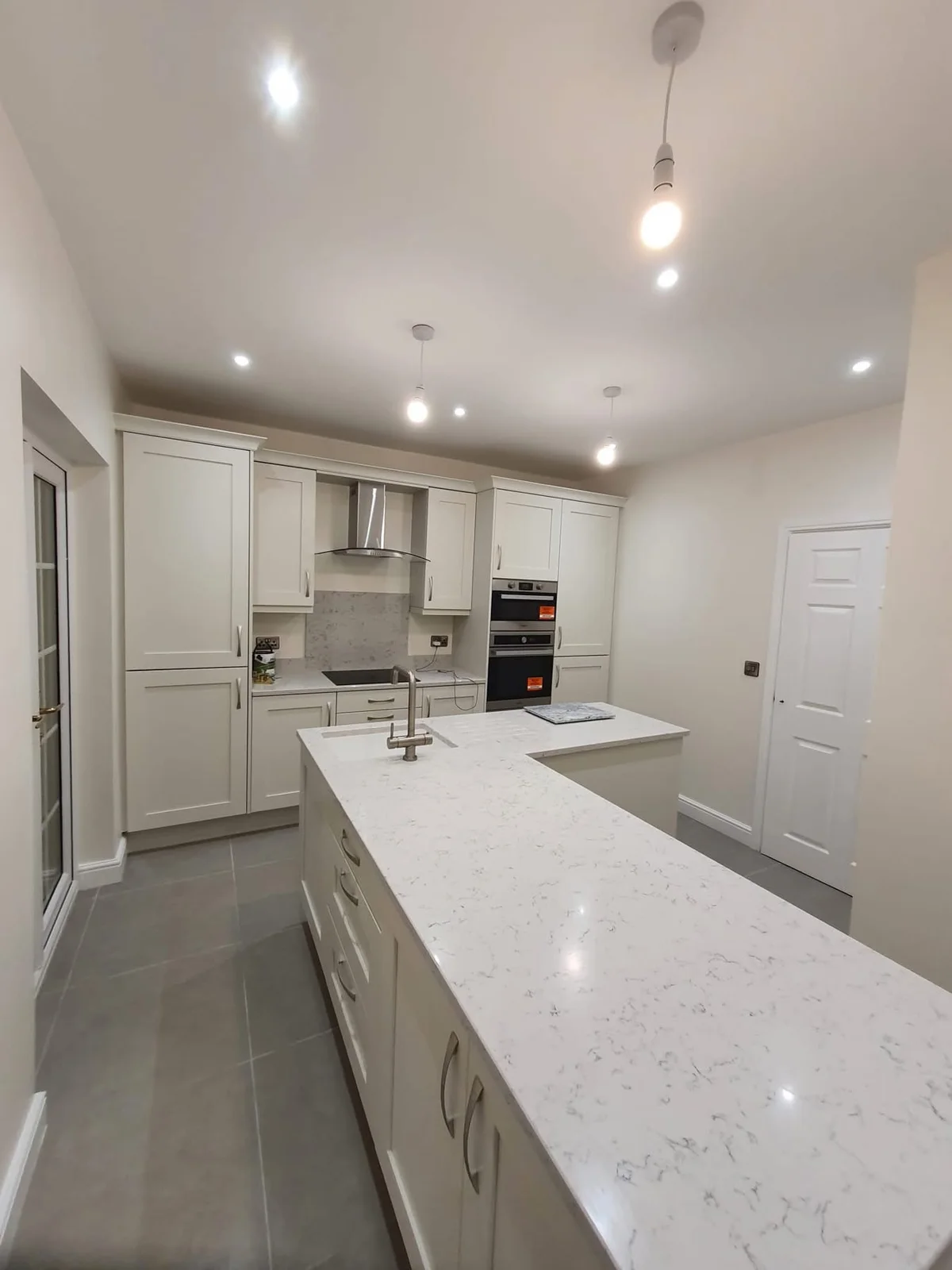
If a kitchen refresh is being considered, start with suitability and daily use rather than choosing a colour first. Cabinet materials, current coatings, grease, worn edges and moisture damage affect whether a respray is appropriate. Photograph the whole kitchen and close details of the fronts, backs and edges. Make a list of the components you want included, such as doors, drawer fronts and visible end panels. A new finish does not automatically address loose hinges, damaged substrate or poor drawer movement.
Discuss what access is needed, how components will be dealt with and which facilities may remain available. Cleaning, abrasion, masking and curing are real parts of the process, not delays that disappear if the household is busy. Where suitable, a kitchen cabinet respray can be assessed alongside painting the surrounding room. Coordinate the chosen colour with existing worktops, flooring and splashbacks. Agree the order of any repairs or hardware changes so the decorative specification reflects the kitchen you intend to keep, rather than an arrangement about to be altered.

Browse the full project gallery for more preparation and finished-work photographs.
A feature wall can give a shared living or dining room a different identity without replacing everything in it. Choose its position after considering furniture, door openings and the view from adjacent spaces. A pattern behind a dining table is experienced differently from one viewed close up beside a sofa. If the room includes a television or detailed shelving, consider whether a busy background competes with those elements. An inspiration image is useful, but the design needs testing against the layout of your own room.
For wallpapering, send the product reference and hanging instructions before the scope is finalised. Wall preparation, pattern repeat, batch consistency and matching allowance all affect the plan. Do not assume that the roll quantity printed on a basic calculator covers awkward corners or several openings. If paint is also being applied, agree how paper, trim and adjoining walls will be sequenced. Suitable spray finishing for selected features can be discussed separately, with the method chosen around the surface and working conditions rather than a promise that one technique suits everything.
Decide who is responsible for clearing shelves, moving small belongings, taking down curtains and arranging larger furniture. Tell Matthew about items that cannot be moved safely or need specialist handling. Floors, fittings and retained furniture require appropriate protection, but protection is not a reason to leave every surface crowded. Access to edges, corners and trim still needs considering. A few clear photographs before the work can help explain unusual constraints and prevent the plan relying on space that does not actually exist.
At completion, drying and curing should not be treated as the same event. Follow the particular product guidance before washing walls, placing objects against fresh finishes or returning components to heavy use. Ask how to deal with early marks and keep the product details for later maintenance. In an occupied household, a little planning for this period is useful: temporary care may be easier when everyone knows which surfaces need protecting. The portfolio shows examples of Matthew’s work, while the arrangements for your own home should be agreed directly around its circumstances.
When several people use the home, a short checklist can prevent small misunderstandings becoming daily frustrations. Identify the work area, the route that must stay clear and the rooms available for ordinary activities. Decide where shoes, coats, toys and bags will go temporarily rather than moving them from one surface to another while work is underway. Tell everyone which doors or cupboards are part of the project. A wet or newly cured surface should not depend on one person remembering to warn every other member of the household.
Arrange belongings according to how they need to be accessed. Put essential items somewhere outside the work area and pack less-used objects securely. Fragile or valuable possessions should be handled deliberately, not left on a shelf because protection is expected later. Discuss large furniture and appliances separately; moving an object safely may require arrangements beyond normal decorating work. Explain any limitation before the start, particularly where a room cannot be cleared as far as a photograph might suggest. Access to corners and trim needs actual space, not merely an intention to make room eventually.
Keep the agreed surface and colour list available as well. Similar rooms or several related shades can create confusion if decisions remain in messages scattered over time. Record which walls, ceilings and pieces of woodwork receive which finish. If a change is requested after the plan has been settled, discuss its practical effect before assuming it is a direct swap. A different product, paper or preparation requirement can alter the sequence even when the visual difference seems small.
Use the handover to establish a household aftercare plan. Ask when each type of finish can be cleaned and what methods are appropriate. Explain that touch-dry is not necessarily ready for vigorous use, and keep furniture or adhesive items from damaging fresh surfaces. A simple set of shared expectations helps the rooms return to normal without immediately testing the new coating beyond its intended early use. That practical care supports the work just as much as the decisions made before the first surface is prepared.
A useful request includes your postcode, the rooms or elevations, the current condition, existing wallpaper and any preferred timing. Say whether ceilings, doors, frames and skirting are included, and mention kitchen fronts or fitted furniture as separate elements. If building, plumbing or electrical work is still outstanding, explain the sequence being proposed. That allows preparation and readiness to be discussed before a final decorating programme is assumed. Availability and coverage are confirmed for the actual enquiry.
Contact Matthew Robinson Painting & Decorating on 07763095929 or email info@mrdecorteesside.co.uk. You can also send the project details online. For outside surfaces, include photographs of each area and access information so exterior decorating can be assessed separately from the rooms. Whether the job is one bedroom or several connected spaces, the starting point remains a defined result, a sound base and practical arrangements that let the home function while the work is carried out.
YOUR COULBY NEWHAM PROJECT
Project-specific advice starts with the actual surfaces, access and finish you have in mind.
Identify the spaces that must remain usable and the times when access is essential. Discuss these before dates are agreed, especially for stairs, bedrooms and kitchens. A room-by-room sequence may be more practical than opening several areas at once. The right plan depends on preparation, coating requirements and the household, so avoid assuming one standard schedule will suit every project.
A suitable coating can be selected with frequent use in mind, but its performance depends on the product, sound preparation and correct application. Discuss the marks you expect to clean and the appearance you prefer. Follow curing instructions before washing. No decorative coating should be treated as immune to impact, abrasion or unsuitable cleaning chemicals.
That depends on the agreed components, method and working arrangements. Explain what is being finished and ask what needs clearing before the start. Access, protection and handling may require more space than you expect. Do not assume cabinets can be used normally throughout the process; agree practical kitchen arrangements and the care needed while the finish cures.
They can leave adhesive, damaged coating or changes in texture. Tell Matthew what has been attached and avoid assuming the area will only need a topcoat. Some marks need cleaning, filling or other preparation. If you are unsure how to remove an item without further damage, discuss it before repeatedly pulling or scraping at the surface.
Floor area does not capture all the work. A staircase can involve height, restricted access, several doors, handrails, spindles, trim and many edges. Preparation and protection may also be more involved. Ask for the included surfaces to be stated clearly so the quotation can be understood in terms of the actual work rather than a simple room comparison.
It may be, depending on the product, the wall and how the area is used. Consider contact from chairs and the manufacturer’s cleaning guidance, as well as the pattern and colour. Share the paper specification before buying it. A visually attractive design still needs an appropriate location, sound preparation and a realistic maintenance expectation.
Coordination is needed. Dust, repairs, tools and repeated access can interfere with preparation or damage completed finishes. Discuss the full programme and the responsibilities of each trade before dates are fixed. Finishing disruptive work first is often sensible, but the exact sequence should reflect the project rather than a blanket rule.
Explain which surfaces are newly finished, what the curing guidance says and when cleaning or heavy use is appropriate. Keep furniture from rubbing against fresh coatings and avoid adhesive attachments too soon. Retain the product, colour and sheen information. Clear aftercare arrangements help protect the work during the period when the home is returning to normal use.
EXPLORE NEARBY
Compare decorating services, read customer feedback, or view Matthew’s project gallery.
FIND YOUR AREA
Explore town, village and neighbourhood guides. Confirm your postcode and the work required when asking about a visit.
LET’S PLAN YOUR PROJECT
Send the rooms or surfaces involved, your postcode and preferred timing. Matthew can then discuss the next step towards a free, no-obligation quotation.
Request your free quoteKIND WORDS. BEAUTIFUL HOMES.
★★★★★ 5.0 on Google · 19 reviews
We recently had Matt from Attention to Detail complete work on our hallway and staircase, and we honestly couldn’t be happier with the results.…Read reviews on Google ↗
Attention to Detail is certainly Matt. He has decorated my hall/stairs, lounge and kitchen. I could not fault his work and professionalism.Read reviews on Google ↗
Matt recently decorated our new interior doors, architraves and door frames, and the standard of his work was outstanding.Read reviews on Google ↗
Matt goes above and beyond and his attention to detail literally is perfection!Read reviews on Google ↗
We had Mathew of ATD (Attention to Detail decorating) to prepare and decorate our hall, stairs, and landing, as well as our large front…Read reviews on Google ↗
Matt I cannot recommend enough the name says it all, attention to detail to a fine T!Read reviews on Google ↗
Matthew has done 5 rooms in total for me, he worked above and beyond to perfection. He is very professional.Read reviews on Google ↗
We have used Matthew a few times for different rooms and houses.Read reviews on Google ↗
Matt totally transformed my living room after I had a media wall built.Read reviews on Google ↗
Amazing and Professional from start to finish!Read reviews on Google ↗
Have had Matthew from Attention to Detail in to paint our bathroom and he did an amazing job.Read reviews on Google ↗
I’ve used Matt a couple of times for work in my house, and not once did he let me down even at short notice.…Read reviews on Google ↗
I have used Attention to detail a number of times and Matty has almost decorated my whole house plus frenchic’d some furniture for me.…Read reviews on Google ↗
Excellent service and excellent job completed. Matt certainly lives up to his company name with attention to detail and a high standard of work.Read reviews on Google ↗
This is the second time I have used ATD, and for an even bigger job.Read reviews on Google ↗
Matt decorated all of my bungalow, excellent work very professional would highly recommend himRead reviews on Google ↗
Used ATD recently to redecorate my hall,stairs, and landing, I would recommend this lad anytime he's very thorough clean and tidy worker above all…Read reviews on Google ↗
Excellent service, very professional, went the extra mile. Lovely guy 👍Read reviews on Google ↗
Matt has just painted our media wall for us and did a fantastic job.Read reviews on Google ↗