
Kirsty Littlefair
Google review★★★★★
We recently had Matt from Attention to Detail complete work on our hallway and staircase, and we honestly couldn’t be happier with the results.…Read reviews on Google ↗
MATTHEW ROBINSON PAINTING & DECORATING
Painter and decorator enquiries in Berwick Hills. Plan focused room improvements, preparation, feature walls, woodwork and suitable kitchen updates.
Tell Matthew your postcode and project details so coverage, suitability and availability can be confirmed.
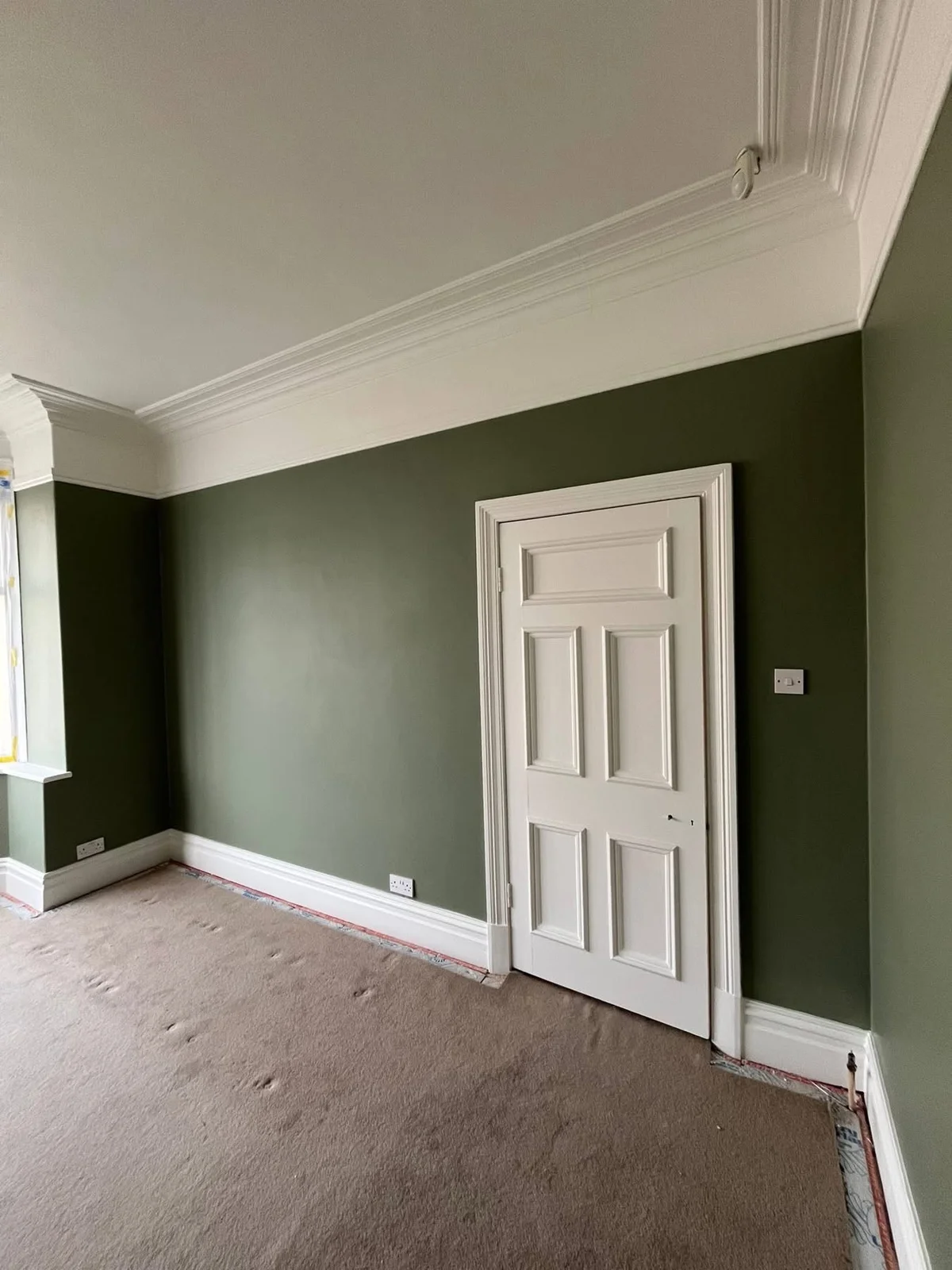
A decorating budget works harder when the brief identifies the change that matters most. Perhaps a small room needs a more settled colour scheme, a heavily used living space needs careful preparation or a feature wall is being reconsidered. Matthew Robinson Painting & Decorating welcomes Berwick Hills enquiries for these defined improvements and for broader work across suitable interior and exterior surfaces. The first conversation is about the starting condition, the rooms involved and what you hope the finished spaces will do for your home.
Berwick Hills is in Middlesbrough, with the area also appearing in the council’s Berwick Hills and Pallister descriptions. Include your postcode when requesting an assessment. Locality alone does not establish the age, material or condition of a property, and this page does not make those assumptions. Call 07763 095929 or send photographs through the enquiry form to discuss a free, no-obligation quotation, the proposed preparation and current availability for the project you have in mind.
Start with a simple ranking: essential work, useful additions and changes that can wait. This helps distinguish a room that needs damaged surfaces addressed from one that is sound but no longer suits your taste. It also allows the assessment to focus on the places that affect daily life. A clear priority list is more informative than asking for the cheapest way to paint everything without explaining which result matters most.
Within each room, list walls, ceiling, woodwork and any wallpaper or fitted furniture. Identify surfaces you want left alone. The scope can then be discussed as a set of tasks rather than a vague room label. If work needs to happen in stages, explain the reason and the desired order. Staging may affect setup and access, so it should be agreed before the programme is settled rather than assumed to divide naturally into equal visits with no other practical consequences.
A compact room can show every junction clearly. The line between wall and ceiling, the relationship between a door frame and adjacent wall, and the colour behind furniture all influence the impression. Decide whether the project includes a full room finish or only selected surfaces. An old ceiling or tired frame can remain conspicuous beside new walls, even when the wall colour itself is well chosen.
Look at the room from the doorway and from the position where it is most often used. If a large item dominates one wall, include it when choosing the scheme rather than treating it as an afterthought. The interior painting service can be discussed with these boundaries in mind. A modest floor area does not automatically mean minimal work, especially if the room has several doors, fitted items or a background requiring more preparation than first appears in a photograph.

Browse the full project gallery for more preparation and finished-work photographs.
There is no universal rule that a small room must be white or that a feature colour belongs on the shortest wall. Light, furniture and the room’s purpose all influence the result. A darker scheme can be a deliberate choice, while a pale one can still feel busy if several finishes compete. Decide what effect you want and test the actual products in the room where they will be applied.
Place samples beside flooring and fixed furniture, then view them in daylight and under your normal evening lamps. If the hallway is visible through an open door, consider that relationship as well. Keep records of manufacturer, shade and finish once the decision is made. A photograph of an inspiration room is useful as a direction, but its lighting and surfaces may be very different from your Berwick Hills property. It should begin a discussion rather than serve as a promise of an identical appearance.
A new colour cannot make an unstable background sound. Previous repairs, lifting paint, old adhesive and small impacts can all affect the finished surface. Explain whether the main issue is marks, roughness, cracking or peeling. Photographs showing side light across a wall can reveal details that a straight-on image hides. If the intended result includes improving surface consistency, make that part of the brief before the quotation is agreed.
The surface preparation and wall correction service can be assessed for the condition found. Some defects may be treated locally, while others need broader work or attention from another specialist. A stain that keeps returning or a crack that changes should not be dismissed as ordinary wear. Describe its history and any investigation already carried out. Decorating should follow the resolution of an active cause rather than provide a fresh cover that leaves the same problem to emerge again later.
A living room can receive very different treatment across its surfaces. One wall may only be seen, another may have chairs rubbing against it and a third may carry fittings and cables. Identify these uses when discussing products. A finish chosen for cleanability still needs suitable preparation and realistic care; it should not be expected to resist every impact, stain or cleaning chemical without any change in appearance.
Think about the arrangement after the room is finished. Small changes in furniture position can reduce repeated contact with a new wall. If a television bracket, shelving or picture grouping will move, settle the layout before final decoration so old fixing points and new holes can be considered together. Tell Matthew if the room must remain usable each evening. That requirement affects clearing, protection and sequence, so it belongs in the initial discussion rather than being discovered after the working area has been prepared.
Skirting, frames and doors often show concentrated wear that is easy to overlook beside a more obvious wall problem. Chipped corners, dirt around handles and several old layers can affect the new finish. Ask which elements are included and how the preparation will reflect the existing coating. A simple colour change over sound woodwork is not the same task as correcting extensive failure or working around badly damaged edges.
Decide whether door faces and edges will be included and how the result meets neighbouring rooms that remain unchanged. If hardware is being replaced, provide the details before coating. Different fixing positions can require preparation, and a new handle may reveal a different area of the old surface. For suitable selected fitted pieces, spray application may be considered, but the practical protection and access should guide the method rather than a general assumption that spraying is always the best finish.

Browse the full project gallery for more preparation and finished-work photographs.
A carefully placed wallcovering can give a room identity without requiring every surface to carry a pattern. Consider the parts that remain visible after furniture is reinstated, the height of the wall and the number of interruptions. A design with a strong repeat can look different when most of it sits behind a cupboard. A larger sample or a view of the full repeat is often more informative than a small isolated swatch.
For wallpaper hanging, share the paper reference and the manufacturer’s guidance before ordering quantities. Stripping, cleaning old adhesive and preparing a suitable background may be necessary. Ask whether lining or additional correction is included in the proposed scope. Keep batch information and avoid assuming that plain-looking paper has no matching or installation requirements. A successful feature depends on a suitable base and enough of the correct material, not simply a design that looks appealing in an online photograph.
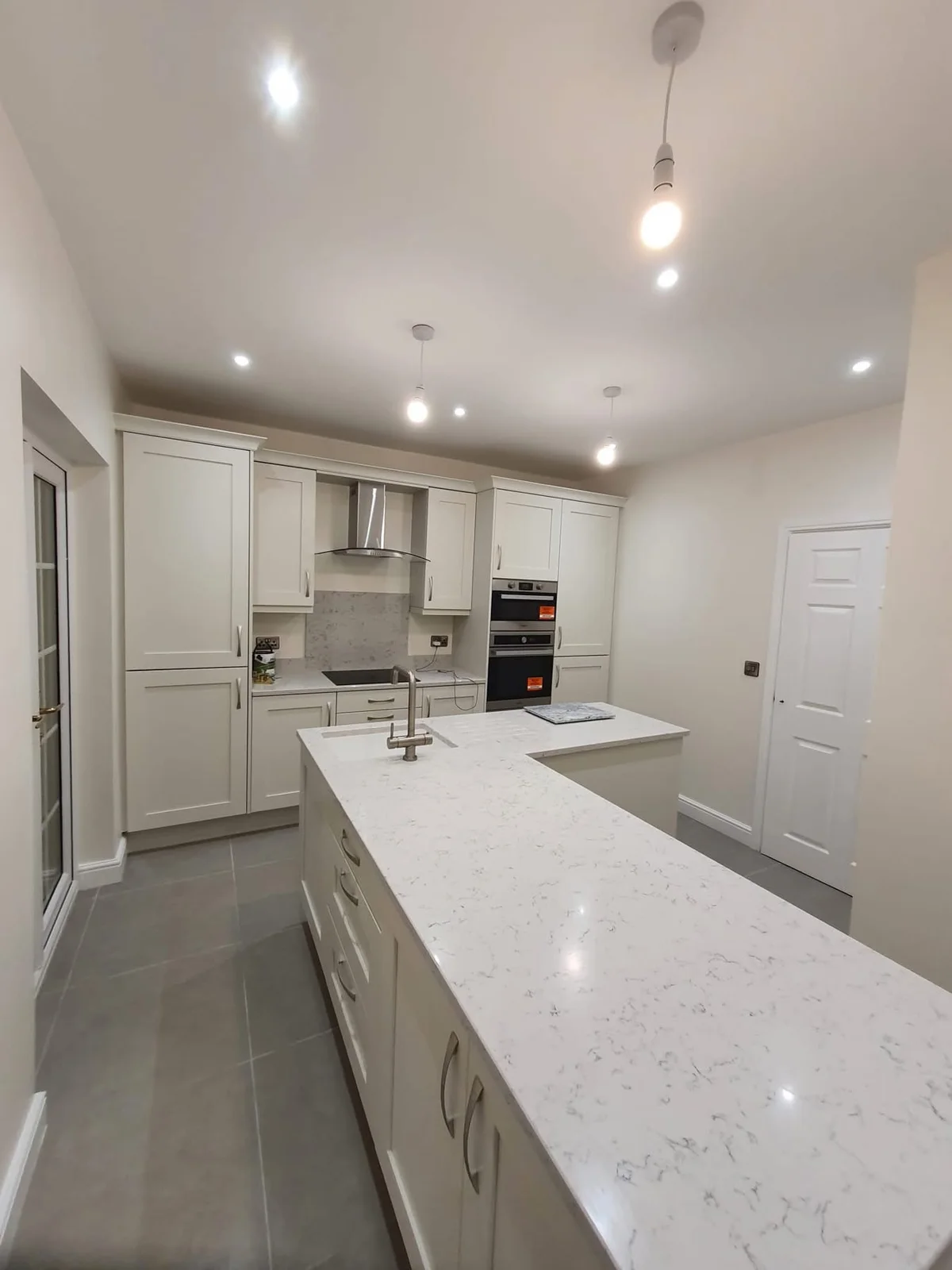
When the kitchen layout remains useful, changing the cabinet finish may be worth discussing alongside room painting. Start by describing the components rather than the desired colour alone. Fronts, end panels, plinths and trims can vary in material and condition, and damage around frequently handled edges deserves close-up photographs. A failing film or swollen panel should not be concealed behind a general promise that any kitchen can be resprayed.
The kitchen cabinet respray service can be considered after the components and proposed scope have been assessed. Explain what must remain usable during the work and whether handles, worktops or appliances are changing. Those alterations affect sequence and protection. Ask how to care for the new finish during curing and afterwards. A practical proposal balances the visual improvement with the condition of the kitchen you have, rather than treating refinishing as an automatic substitute for every type of repair or replacement.
Decorating a connecting space can affect the whole property, even if the task is visually modest. Think about the route from the entrance to the working room, where materials can be carried and where household items will be stored. If a hall is included, identify door frames, rails and higher areas separately. Tell Matthew about narrow points, fixed fittings and any access requirements that influence safe movement.
If several rooms are involved, decide whether the hall should be finished after their dusty preparation and large-item moves. Fresh surfaces can otherwise become the route through which later work is carried. An occupied house also needs agreement about essential doors and daily access. These details do not need to be complicated, but they should be explicit. The project becomes easier to organise when everyone knows what can move, which rooms remain available and how completed areas will be protected while other stages continue.
Outside work belongs in a separate part of the decorating brief. List the door, masonry or other painted surface, provide photographs and explain any history of peeling or staining. Different materials can need different preparation and coatings. High areas and restricted spaces need an appropriate access assessment, and loose or damaged backgrounds may require repairs before decorating can be specified responsibly.
The exterior painting service is weather-dependent and must follow product requirements. Explain your preferred period without assuming every external task can be tied to the same date as an indoor room. Surface moisture, temperature and drying intervals can affect the programme. If the exterior is sound but looks dated, say that; if it is failing repeatedly, describe the pattern. This distinction helps the assessment focus on the right problem rather than treat all outside colour changes as the same simple operation.
Prepare your postcode, photographs, room list and the surfaces you want included. Add a note of your priorities, the timescale you hope for and whether the property will remain occupied. Mention other trades and material choices already made. If the aim is to work within a defined budget, explain the essential scope first so alternatives can be discussed as genuine changes to the work rather than shortcuts around preparation that remains necessary.
Contact Matthew Robinson Painting & Decorating at info@mrdecorteesside.co.uk or on 07763 095929. The portfolio gallery can help you describe a style or type of finish, but the images are not presented as evidence of a specific Berwick Hills project. Use the contact page to send details and discuss an appropriate assessment. The quotation can then state preparation, surfaces, materials and exclusions, giving you a practical basis for deciding how to proceed.
YOUR BERWICK HILLS PROJECT
Project-specific advice starts with the actual surfaces, access and finish you have in mind.
Yes. Explain which rooms or surfaces need attention first and which are optional. The quotation discussion can distinguish separate stages, but each stage still needs suitable preparation and access. Multiple visits may involve different setup requirements from one continuous project. Agree the boundaries and programme in advance rather than assuming that a broad quotation can be divided into any sequence without affecting how the work is carried out.
It can make a noticeable difference, but the effect depends on layout, lighting and what remains visible around furniture. Decide whether colour, pattern or texture is the objective. A strong feature beside tired adjoining surfaces may not achieve the coordinated result you expect. Discuss the condition of the whole room and specify whether the quotation covers the feature only or also the surrounding paintwork and preparation.
Paint can change how a room feels, but lighting, furnishings and the amount of natural light also matter. Test actual samples on more than one wall and view them during the hours the room is used. A light shade is not a guarantee of a bright-looking space. Explain the problem and the fixed elements so the colour choice and decorating scope are considered in the room’s real context.
Floor area does not describe every surface. Several doors, fitted cupboards, awkward edges, wallpaper removal and damaged backgrounds can all add preparation and finishing tasks. A clear room photograph and a list of included elements make the enquiry more useful than dimensions alone. Compare quotations on the same scope, including woodwork and surface correction, instead of expecting the smallest room always to be the simplest job.
Explain the sofa’s position, size and whether it can move safely within or outside the room. Access and protection need to be agreed before work begins. Painting only the easily reached parts may leave an incomplete result if furniture moves later. Do not assume heavy-item moving is included. A practical clearing plan should identify what you will remove and how larger items that remain will be handled.
A suitable coating can be discussed for the room’s use, but repeated hard contact can still mark or damage it. Consider the furniture position and any appropriate protection where contact occurs. Tell Matthew about past wear and cleaning so the product choice is based on actual use. Fresh paint also needs its specified curing period before cleaning or heavy handling; touch-dry is not the same as fully resistant.
Yes, provided the scope and boundaries are clear. Look at the existing ceiling in daylight and note marks or patches that may become more obvious beside fresh walls. Ask whether any local preparation at the junction is included. Keeping the ceiling unchanged is a valid choice, but it should be a deliberate decision rather than an assumption that every quotation includes the same full-room treatment.
It may be worth assessing if the components are suitable and the layout still works. Include photographs of the doors, edges, frames and visible panels so the proposal can define what changes and what remains. Colour alone is not enough to determine suitability. Peeling coverings, swollen material and hardware problems need identifying first, with preparation and any preceding repairs considered before a finish is promised.
Share the plan early and coordinate the sequence. New fixings, altered positions and removed brackets can affect the walls and may be better resolved before final coating. If the shelving will be fitted later, discuss how adjacent finishes will be protected and whether further work is likely. A clear plan reduces avoidable damage to fresh surfaces and prevents local touch-up from becoming an unspoken part of the original scope.
Send your postcode, photographs, the surfaces involved and an explanation of the result you want. Mention what furniture and flooring will stay, any defects and your preferred period. Colour can be settled during planning, but the general direction is helpful, especially for a substantial light-to-dark or dark-to-light change. Matthew can then discuss assessment, suitability and the details needed before the quotation is finalised.
EXPLORE NEARBY
Compare decorating services, read customer feedback, or view Matthew’s project gallery.
FIND YOUR AREA
Explore town, village and neighbourhood guides. Confirm your postcode and the work required when asking about a visit.
LET’S PLAN YOUR PROJECT
Send the rooms or surfaces involved, your postcode and preferred timing. Matthew can then discuss the next step towards a free, no-obligation quotation.
Request your free quoteKIND WORDS. BEAUTIFUL HOMES.
★★★★★ 5.0 on Google · 19 reviews
We recently had Matt from Attention to Detail complete work on our hallway and staircase, and we honestly couldn’t be happier with the results.…Read reviews on Google ↗
Attention to Detail is certainly Matt. He has decorated my hall/stairs, lounge and kitchen. I could not fault his work and professionalism.Read reviews on Google ↗
Matt recently decorated our new interior doors, architraves and door frames, and the standard of his work was outstanding.Read reviews on Google ↗
Matt goes above and beyond and his attention to detail literally is perfection!Read reviews on Google ↗
We had Mathew of ATD (Attention to Detail decorating) to prepare and decorate our hall, stairs, and landing, as well as our large front…Read reviews on Google ↗
Matt I cannot recommend enough the name says it all, attention to detail to a fine T!Read reviews on Google ↗
Matthew has done 5 rooms in total for me, he worked above and beyond to perfection. He is very professional.Read reviews on Google ↗
We have used Matthew a few times for different rooms and houses.Read reviews on Google ↗
Matt totally transformed my living room after I had a media wall built.Read reviews on Google ↗
Amazing and Professional from start to finish!Read reviews on Google ↗
Have had Matthew from Attention to Detail in to paint our bathroom and he did an amazing job.Read reviews on Google ↗
I’ve used Matt a couple of times for work in my house, and not once did he let me down even at short notice.…Read reviews on Google ↗
I have used Attention to detail a number of times and Matty has almost decorated my whole house plus frenchic’d some furniture for me.…Read reviews on Google ↗
Excellent service and excellent job completed. Matt certainly lives up to his company name with attention to detail and a high standard of work.Read reviews on Google ↗
This is the second time I have used ATD, and for an even bigger job.Read reviews on Google ↗
Matt decorated all of my bungalow, excellent work very professional would highly recommend himRead reviews on Google ↗
Used ATD recently to redecorate my hall,stairs, and landing, I would recommend this lad anytime he's very thorough clean and tidy worker above all…Read reviews on Google ↗
Excellent service, very professional, went the extra mile. Lovely guy 👍Read reviews on Google ↗
Matt has just painted our media wall for us and did a fantastic job.Read reviews on Google ↗