
Kirsty Littlefair
Google review★★★★★
We recently had Matt from Attention to Detail complete work on our hallway and staircase, and we honestly couldn’t be happier with the results.…Read reviews on Google ↗
MATTHEW ROBINSON PAINTING & DECORATING
Painting and decorating enquiries in Longlands. Plan move-in refreshes, room specifications, woodwork, wallpaper removal and suitable kitchen finishes.
Tell Matthew your postcode and project details so coverage, suitability and availability can be confirmed.

Moving into a home, preparing it for a new occupant or changing the way a room is used creates a natural opportunity to decorate. It also creates deadlines and competing tasks. Matthew Robinson Painting & Decorating welcomes Longlands enquiries where a clear specification is needed before a room refresh or wider programme begins. A useful starting point is to explain who will use the property, which surfaces are changing and what other work must happen before the final finishes.
Longlands is a Middlesbrough neighbourhood, reflected in the council’s Longlands and Beechwood area descriptions. Include the property postcode when requesting an assessment rather than relying on a broad locality label. This page does not assume a particular tenure or building type. Whether the property is your own home or one you are authorised to arrange work for, the quotation should be based on its actual condition, access and agreed scope. Contact Matthew on 07763 095929 to discuss those details.
A target date is useful only when the jobs leading to it are understood. Electrical changes, plaster repairs, joinery, cleaning and floor fitting can all affect decorating. Ask which work will disturb the walls, ceilings or woodwork, and organise those interfaces before final coating. A room that appears empty may still be unready if repairs are incomplete or new materials have not reached a suitable condition.
When making an enquiry, provide the date and explain why it matters. A key handover, delivery of large furniture or start of a tenancy creates different constraints from a flexible preference. Matthew can discuss availability and the decorating sequence, but other trades’ readiness should not be assumed. Share their intended programme and identify any uncertainty. It is better to agree a realistic start based on suitable surfaces than to arrange a nominal date that leaves the decorator working around unfinished repairs or late alterations.
Before packing or clearing, take photographs that show each wall, the ceiling, woodwork and any notable defects. Wide views explain layout; close-ups explain damage. Record what is ordinary wear and what may need investigation, such as recurring staining, loose plaster or cracks that have changed. If the previous decoration history is unknown, say so. Guessing that a wall is sound because it was recently painted can hide a problem the assessment needs to consider.
For a property managed on behalf of someone else, make sure the person arranging work has authority to approve the scope and any changes. Keep the decorating brief separate from assumptions about inventories or deductions; the service enquiry should identify the work required, not decide a dispute. Clear before photographs can also support practical communication about what is included. They are not a replacement for an assessment where access, material or the extent of preparation cannot be established from images alone.


Browse the full project gallery for more preparation and finished-work photographs.
A list stating three bedrooms and a lounge is a useful outline, but it does not fully describe decorating scope. Specify walls, ceilings, doors, frames, skirting and fitted items for each room. Note which colours remain and which change. Identify wallpaper to remove or hang and any areas expected to need correction. That prevents a basic walls-only refresh from being confused with a comprehensive room project involving detailed woodwork and preparation.
The interior painting page provides an overview of the service. For your Longlands property, ask for the proposal to reflect the actual surfaces rather than a broad room count alone. If priorities differ between rooms, say which need most attention. A spare room being left unchanged should be excluded explicitly, and a cupboard or passage should not be assumed included simply because it adjoins a decorated space. Clear boundaries help control decisions without reducing the work to an unrealistic one-price-per-room expectation.
Emptying a room can reveal the parts that were hidden: old fixing holes, colour differences behind wardrobes and damage around a removed bracket. Wallpaper may also have been cut around fitted items or later additions. Tell Matthew what is being removed and what will replace it. The final layout can affect whether a previously concealed area needs full preparation and decoration rather than a small local patch.
If the plan includes new shelves, sockets or curtain tracks, settle those positions before final painting. Later drilling can create fresh damage and make touch-up difficult. The surface preparation and wall correction service can be discussed in relation to the background once visible. Some changes may need another trade before decorating begins. Do not expect filler and paint to correct a moving defect, persistent damp or a surface that has not been made stable by the appropriate preceding work.
A property change can be a chance to simplify the visual scheme, but a consistent palette need not remove all character. Consider light, flooring and the purpose of each room. A north-facing study and a bright living space may show the same shade differently. Use samples where the colours will be seen and compare them with the permanent surfaces, rather than selecting solely from a card viewed elsewhere.
If several people must approve the scheme, nominate who makes the final decision and record it clearly. Product, shade and sheen should be agreed before ordering and application. Avoid relying on phrases such as the usual white or a standard grey, because those can refer to different finishes and manufacturers. A written schedule of colours makes the quotation and the finished work easier to discuss, particularly where the owner, occupant and person arranging the project are not all the same individual.
Rooms that change occupants or work hard every day may need a finish chosen with maintenance in mind. Explain which surfaces are often touched, how they are cleaned and the marks that have been difficult to manage. The actual product and its preparation requirements matter more than choosing by a generic sheen label. A finish suitable for one substrate or use should not automatically be applied everywhere in the property.
Also think about how future repairs will be handled. Retain product details and colours, but recognise that an older wall can change through light exposure and cleaning. A small patch may not blend invisibly even with the original paint. For maintenance purposes, a complete wall or a clear architectural boundary may be more consistent than repeated isolated touch-ups. Agree the current project on its own scope rather than expecting new decoration to prevent every mark or eliminate the need for future care.

Browse the full project gallery for more preparation and finished-work photographs.
Doors and frames often show the concentrated effects of daily use. Chipped corners, built-up layers, damaged edges and loose coatings need assessing separately from the walls. List the door faces and edges included, together with skirting, architraves and any window details. If doors serve rooms outside the project, decide how the new and existing finishes should meet when the door is open or closed.
Tell Matthew if hardware is being changed or if a joiner is still adjusting doors. Those tasks can affect preparation and should be coordinated before the finish is complete. In a vacant property, access may be simpler, but fresh coatings still need suitable conditions and curing time. Do not arrange immediate heavy handling merely because the room is unoccupied. A practical programme considers the period after application as well as the hours during which the surface is being worked on.
Removing old paper can change the project more than a colour choice. The wall may reveal weak paint, old adhesive or extensive repairs beneath the covering. If the condition is unknown, ask how the quotation deals with defects discovered during stripping and how additional work would be agreed. It is more helpful to recognise that uncertainty than to assume the background will be ready for paint as soon as the paper is off.
If replacement paper is planned, provide the product reference and hanging guidance. The wallpapering service can be discussed alongside surrounding paintwork and preparation. Pattern repeats influence quantities, and matching batches should be checked before installation. A property being prepared for a new occupant still deserves a suitable background and careful material planning; a tight handover date does not make a weak surface stable or turn an insufficient number of rolls into a complete room scheme.
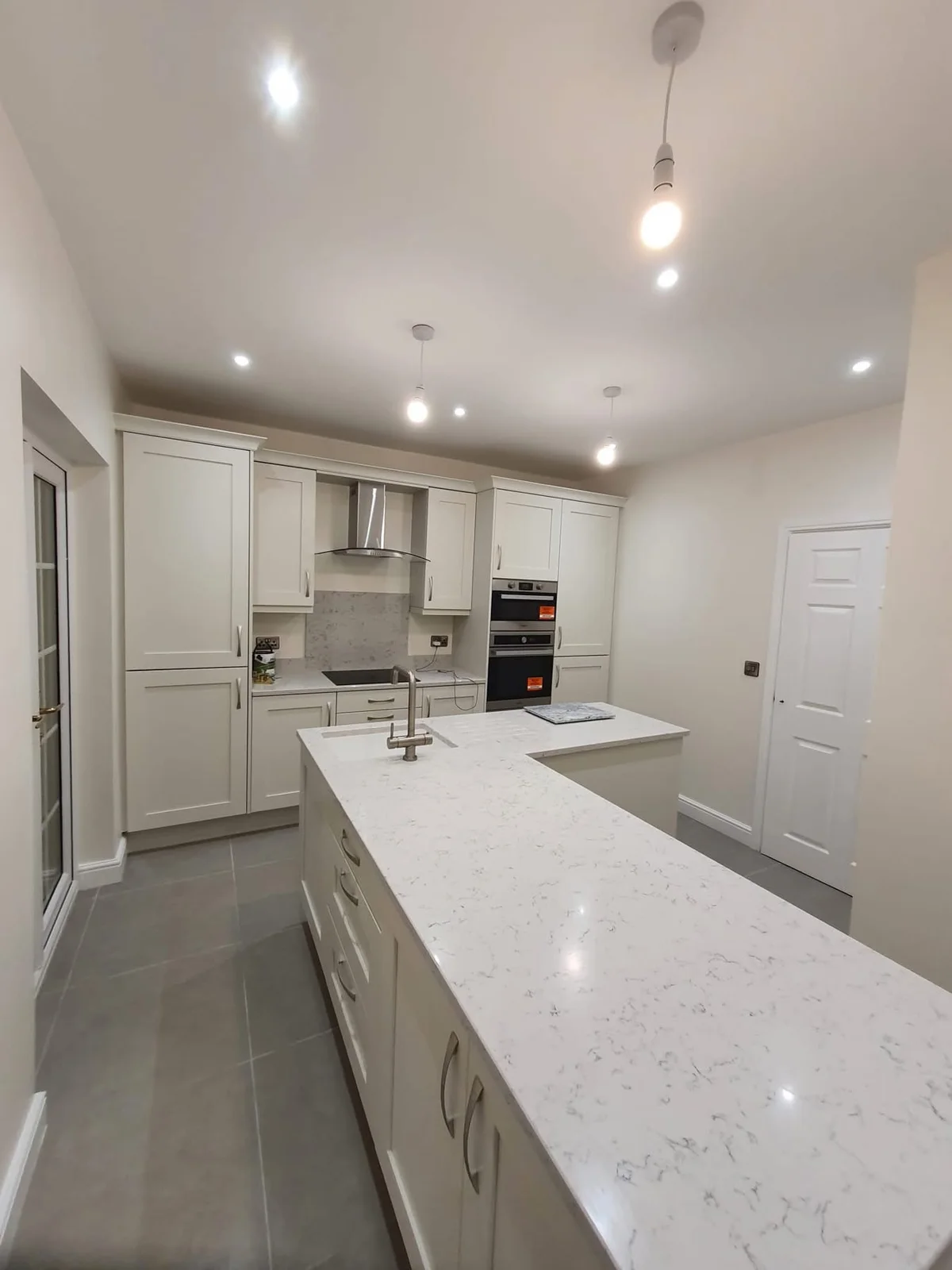
A serviceable kitchen may be a candidate for a different appearance, but condition determines whether refinishing is suitable. Ask about kitchen cabinet resprays if the layout works and the components merit assessment. Photograph fronts, visible end panels, plinths and any wear. Lifted films, swollen edges, failing hinges and loose parts should be identified before selecting a new colour.
If replacement appliances, worktops or handles are planned, share their timing and specifications. A cabinet finish can be affected by later installation work, and changed handle spacing can leave old holes. For selected suitable surfaces, spray application may be considered, with masking and access included in the discussion. The proposal should explain the surfaces included and the care required afterwards, rather than suggest that a colour change alone makes damaged kitchen components equivalent to new ones.
You may also want an entrance or outside painted surface considered before a move or handover. List these separately from the rooms and provide photographs of material and condition. Weather, access and repairs influence what can be scheduled. A surface with loose coatings or signs of water entry needs assessment before it becomes an item on a cosmetic refresh list.
The exterior painting service should be planned around suitable products and application conditions. Discuss an appropriate period and the impact of any fixed handover date, but avoid assuming an outdoor task can proceed regardless of rain, temperature or substrate moisture. If another repair is needed first, that must be incorporated into the sequence. Clear communication about the exterior is particularly useful where the property is empty and somebody needs to arrange access rather than being present throughout the day.
Agree key access, parking or unloading restrictions, working areas and the facilities needed before the start. If the property is empty, explain how it will be checked and who can answer decisions while work proceeds. A clear contact arrangement avoids relying on an absent owner to resolve an unexpected defect immediately. Also confirm what must be removed from cupboards or room surfaces and what protection will be used around items that remain.
Provide your Longlands postcode and a realistic preferred period through the contact page, email info@mrdecorteesside.co.uk or call 07763 095929. The portfolio gallery shows examples of the business’s work rather than proof of a project at your address or a promise of an identical result. Matthew can discuss an assessment, confirm suitability and availability, and prepare a quotation describing the work you are actually asking to have carried out.
YOUR LONGLANDS PROJECT
Project-specific advice starts with the actual surfaces, access and finish you have in mind.
Explain the date, key access and any other work that must finish first. An empty room can simplify some access, but repairs, new plaster and installation tasks still need an appropriate sequence. Do not assume every surface is ready because the furniture has gone. Matthew can discuss availability once the scope and condition are understood and help identify which outstanding tasks affect the decorating stage.
Yes, provided the arrangements and authority to approve work are clear. Identify the owner or responsible contact, explain who will choose materials and confirm who can agree changes if hidden defects are discovered. The quotation should describe the decorating scope rather than assume decisions can be made by anyone with keys. Clear communication is particularly useful when the person organising access will not be present throughout the project.
Vacant rooms can offer clearer access, but they do not remove preparation, drying intervals or detailed woodwork. An empty property may also reveal more defects once furniture is removed. Heating, ventilation and access still need to be suitable. The programme depends on the actual work, not simply whether somebody lives there. Compare quotations using the surfaces and preparation included rather than assuming vacancy guarantees a particular timescale.
Share the date at the first enquiry and explain how certain the preceding programme is. Availability and the condition of the property need confirming before a booking is agreed. Other trades, hidden defects or weather-dependent exterior work can affect timing. A clear target is useful, but it should not lead to skipping necessary preparation or treating fresh coatings as fully cured before the chosen products allow normal use.
Provide the postcode, room names, approximate dimensions where available and the surfaces in each room. Include walls, ceilings, woodwork, paper removal or hanging and selected fitted items. Show defects with photographs and identify exclusions. If only some rooms are priorities, say which. This allows the proposal to reflect the actual project rather than rely on a room count that leaves detailed preparation and finishing boundaries unclear.
Keeping the product and colour details is useful, but it does not guarantee an invisible local patch. Age, light, cleaning, application and surface texture can alter the surrounding finish. Depending on the condition, repainting a complete wall or another defined boundary may be more consistent. Discuss that expectation before the current work is agreed, especially where repeated future maintenance is an important part of your decision.
Tell Matthew which items will move and which fixings are no longer required. Photographs of the existing arrangement can help explain the scope. Do not remove heavy or uncertain fittings unsafely or fill every defect before it has been discussed. The assessment needs to understand the background and the planned final layout so that preparation is based on the surfaces that will actually remain visible.
Share the electrician’s programme and the areas still to be disturbed. Chasing, socket changes or altered fittings can damage fresh decoration, so the sequence should be agreed between the relevant trades. It may be practical to carry out some early preparation, but final coats should not be arranged on an assumption that no further disturbance will occur. Clear interfaces are better than repeated late repairs around completed finishes.
Explain the overall kitchen plan before either task is scheduled. Replacing components can affect adjacent walls, fittings and trim, while refinishing suitable existing fronts has a different preparation and protection plan. The decorating sequence should follow the actual installation work. If a respray is being considered, assess the material and condition first rather than assume every front can be retained or every damaged panel can be corrected by coating.
Refer to the agreed scope and walk through the surfaces included. Ask about product care and any curing restrictions, and retain colour details for future reference. Raise questions while the work and its boundaries are straightforward to identify. The completion conversation should concern the specified decorating project, with any additional work discussed separately rather than assumed to be included because it is nearby or becomes noticeable after the room changes.
EXPLORE NEARBY
Compare decorating services, read customer feedback, or view Matthew’s project gallery.
FIND YOUR AREA
Explore town, village and neighbourhood guides. Confirm your postcode and the work required when asking about a visit.
LET’S PLAN YOUR PROJECT
Send the rooms or surfaces involved, your postcode and preferred timing. Matthew can then discuss the next step towards a free, no-obligation quotation.
Request your free quoteKIND WORDS. BEAUTIFUL HOMES.
★★★★★ 5.0 on Google · 19 reviews
We recently had Matt from Attention to Detail complete work on our hallway and staircase, and we honestly couldn’t be happier with the results.…Read reviews on Google ↗
Attention to Detail is certainly Matt. He has decorated my hall/stairs, lounge and kitchen. I could not fault his work and professionalism.Read reviews on Google ↗
Matt recently decorated our new interior doors, architraves and door frames, and the standard of his work was outstanding.Read reviews on Google ↗
Matt goes above and beyond and his attention to detail literally is perfection!Read reviews on Google ↗
We had Mathew of ATD (Attention to Detail decorating) to prepare and decorate our hall, stairs, and landing, as well as our large front…Read reviews on Google ↗
Matt I cannot recommend enough the name says it all, attention to detail to a fine T!Read reviews on Google ↗
Matthew has done 5 rooms in total for me, he worked above and beyond to perfection. He is very professional.Read reviews on Google ↗
We have used Matthew a few times for different rooms and houses.Read reviews on Google ↗
Matt totally transformed my living room after I had a media wall built.Read reviews on Google ↗
Amazing and Professional from start to finish!Read reviews on Google ↗
Have had Matthew from Attention to Detail in to paint our bathroom and he did an amazing job.Read reviews on Google ↗
I’ve used Matt a couple of times for work in my house, and not once did he let me down even at short notice.…Read reviews on Google ↗
I have used Attention to detail a number of times and Matty has almost decorated my whole house plus frenchic’d some furniture for me.…Read reviews on Google ↗
Excellent service and excellent job completed. Matt certainly lives up to his company name with attention to detail and a high standard of work.Read reviews on Google ↗
This is the second time I have used ATD, and for an even bigger job.Read reviews on Google ↗
Matt decorated all of my bungalow, excellent work very professional would highly recommend himRead reviews on Google ↗
Used ATD recently to redecorate my hall,stairs, and landing, I would recommend this lad anytime he's very thorough clean and tidy worker above all…Read reviews on Google ↗
Excellent service, very professional, went the extra mile. Lovely guy 👍Read reviews on Google ↗
Matt has just painted our media wall for us and did a fantastic job.Read reviews on Google ↗